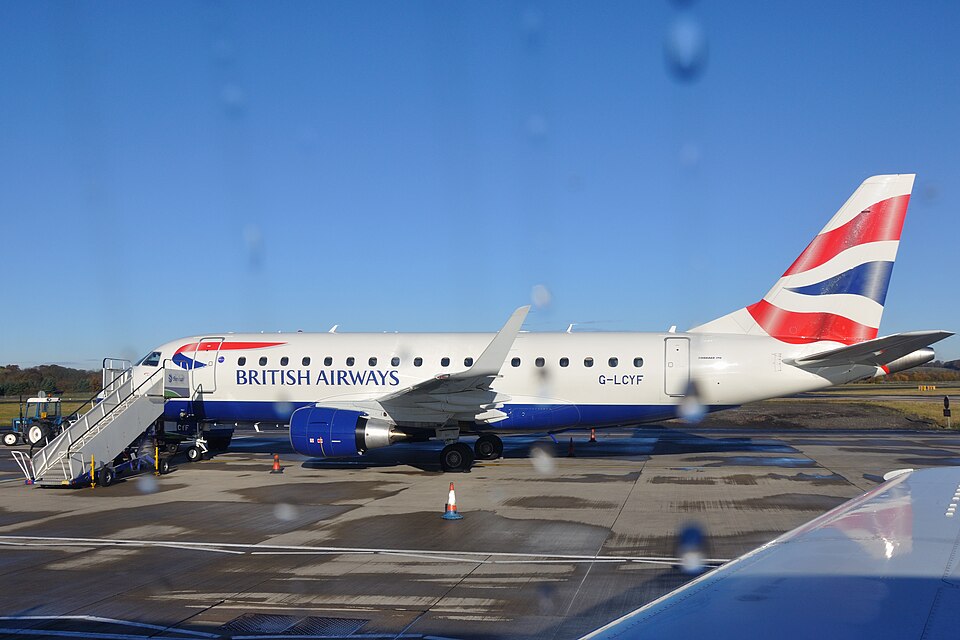
Aircraft and Flight Details
The aircraft involved was an ERJ 170-100 STD Embraer 170, registered G-LCYF, manufactured in 2009. It was powered by two General Electric CF34-8E5A1 turbofan engines. The flight was a commercial air transport passenger service. On board were 4 crew and 68 passengers. The commander, aged 38, held an Airline Transport Pilot's Licence and had 6,500 total flying hours, including 450 hours on type.
Accident Sequence
On 25 July 2010 at 1710 UTC, during pushback from Stand 34 at Edinburgh Airport, Scotland, the underside of the aircraft's tail struck a blast fence. The ground crew halted the pushback, pulled the aircraft slightly forward, and informed the flight crew. The flight crew aborted engine starts and shut down the auxiliary power unit (APU). Passengers disembarked normally using mobile steps.
Damage and Response
The damage was limited to the APU intake on the underside of the tail. An engineer who attended noted that most of the damage occurred when the aircraft was pulled forward after the initial impact, rather than during the collision itself. The aircraft operator subsequently found that ground handling companies should be reminded not to move an aircraft that has sustained damage until it has been inspected by an engineer.
Investigation Findings
Investigations were conducted by the aircraft operator and the ground handling company that performed the pushback. Both organisations identified several factors relevant to the accident, notably that Stand 34 is the only stand at the airport requiring a 'dog-leg' pushback. The investigations highlighted opportunities for improvement in several areas of ground handling operations.
Recommendations
The companies conducting the investigations made several recommendations, focusing on risk assessment of push-back operations, design of push-back procedures, promulgation of clear instructions to staff, training of ground handling staff, the design and marking of Stand 34, and 'near-miss' reporting within the ground handling company. The report noted that ground handling of aircraft is not regulated to the same degree as aircraft operations.