History of the Flight
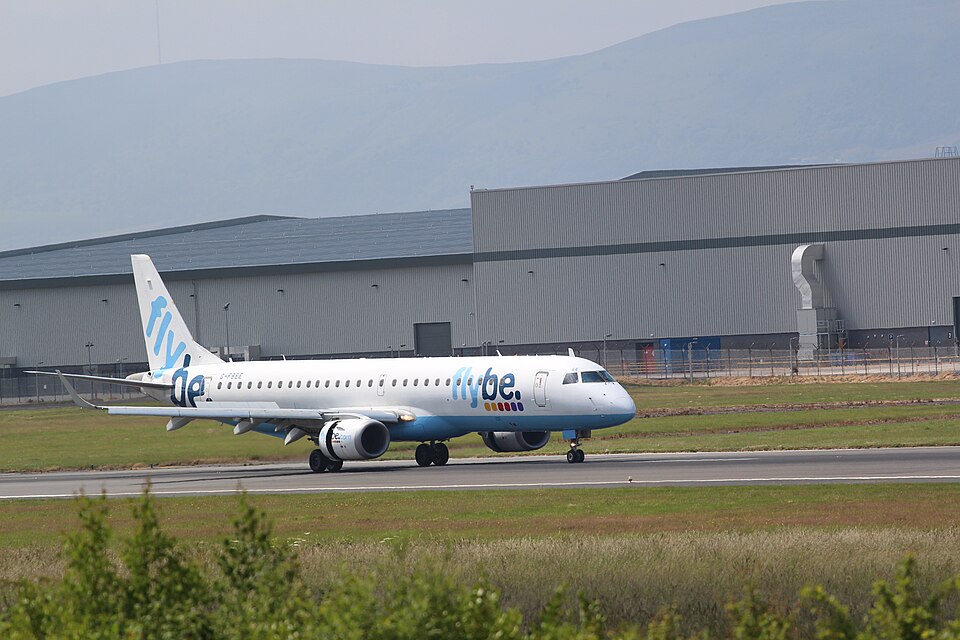
The aircraft, an Embraer 195 (registration G-FBEE), landed at Jersey Airport with a complete loss of fluid from the No 2 hydraulic system due to an in-flight leak from a pipe in the right engine pylon. Following rectification work, the commander and co-pilot departed Jersey on a non-revenue ferry flight to Birmingham International Airport. The flight was uneventful, though the commander noted the aircraft was "a little noisy"; the co-pilot found no unusual engine vibration. After landing, another aircraft radioed the crew advising them to check the right engine. The commander discovered most of both fan cowl doors missing. Fragments were later recovered from the middle of Runway 27/09 at Jersey Airport.
Maintenance Activity
On the evening of 22 February 2010, Technician 'A' began an EDP/Filter check requiring opening of the engine cowlings. He completed the EDP inspection but was interrupted by a telephone call before latching the cowlings shut. He forgot to lock them before handing over to Technician 'B' at 0530 hrs, stating the EDP check was done but filters not checked. Technician 'B' focused on pipe repair and later handed over to Technician 'C' at 1330 hrs, instructing him to complete filter checks. Technician 'B' saw the unlatched cowlings but assumed further access was needed. Technician 'C' completed the filter check but did not realize the latches remained unfastened, certifying both his and Technician 'A''s work.
Examination of the Aircraft
Inspection revealed that the fan cowls of the right engine had torn away from their hinges, leaving only a small portion of the upper structure. Debris from the runway included substantial pieces of each cowl door and numerous smaller fragments. The lack of damage to the clamps and hooks indicated they had not been engaged, confirming the cowls were unlatched before departure. Damage to the airframe was limited to scuffing, denting, and two punctures of the right wing leading edge slats.
Discussion
The primary factor in the cowling detachment was the distraction of Technician 'A' by a telephone call before he completed latching. Three further missed opportunities to prevent the incident were identified: Technician 'B' assumed further access was needed for the filter check; Technician 'C' assumed Technician 'A' had latched the cowls; and the commander's walk-round inspection did not include an explicit check of the engine cowl fasteners. The walk-round checklist included "check access panels are secured" but did not explicitly cover engine cowls.
Safety Actions Taken by the Operator
The operator issued an immediate message requiring an entry in the technical log whenever Embraer 195 engine cowlings are opened, to be signed off upon securing. Procedural training was given to the three technicians involved. The Jersey station engineering manager was reminded of formal handover procedures. The incident was incorporated into the company's continuation training as an example of distraction. A poster campaign highlighted the issue, and a Notice to Aircrews instructed crews to include checking engine cowl fasteners during pre-flight walk-rounds.