History of the Flight
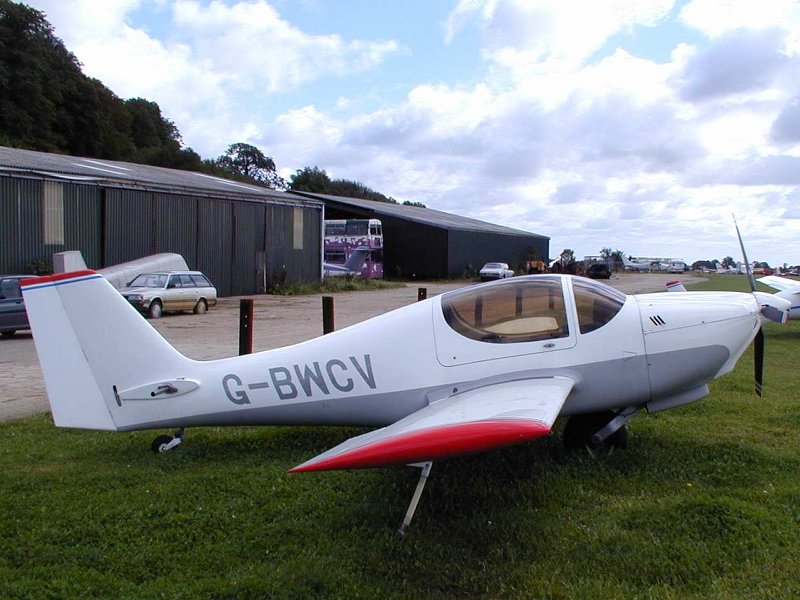
On 16 July 2006 at 1115 UTC, the Europa G-BWCV was cruising at 3,500 ft near the Severn Estuary with the engine at about 4,000 rpm when smoke entered the cockpit accompanied by a burning smell. The aircraft yawed and the nose dropped. The pilot realized the engine had stopped, although the propeller continued rotating due to its free-wheel mechanism. The pilot, who had approximately 1,000 hours of gliding experience, reported an unusually high rate of descent and a severe reduction in elevator effectiveness as he maneuvered towards two adjacent fields. He switched off the master switch, pulled circuit breakers, and turned off the fuel. Smoke cleared from the cockpit. The pilot made an approach to a field measuring 290 m diagonally, avoiding trees and pylons. The gear and flaps were lowered. After touchdown, the pilot retracted the single-wheel landing gear to decelerate, which caused the propeller to break off and the flaps to retract. The aircraft struck a dense hedge at the far end of the field, suffering major damage to the composite fuselage structure fore and aft of the cockpit. Both occupants suffered minor injuries and exited through the doors.
Aircraft and Engine Information
The Europa is a two-seat kit aircraft. G-BWCV was a mono-wheel version with a single main wheel, tail wheel, and outriggers. The mono-wheel partially retracts into a bay between the occupants. The deployment and retraction mechanism for the gear and flaps is linked. The aircraft was powered by an NSI Propulsion Systems EA-81 piston engine, a 98 hp refurbished Subaru car engine. The engine has a reduction drive with a 'Linear Cam Device' that acts as a free-wheel mechanism when the engine stops, allowing the propeller to windmill. A free-wheeling propeller generates more drag than a static propeller, increasing the glide angle and rate of descent. The aircraft was operating on a Popular Flying Association (PFA) Permit-to-Fly. G-BWCV was manufactured in 1997 and had accumulated 76 hours since the engine-airframe combination.
Alternator and Drive Belts
The alternator is mounted on the top rear of the engine and is driven by two parallel toothed belts. The belts were of the Super HC type manufactured by the Gates Corporation, which does not recommend its products for aircraft use. Black rubber deposits were found on the engine around the alternator, and the drive belts showed evidence of slippage and scorching but were not broken. The alternator main bearing had seized. Examination revealed that the bearing cage had failed due to lack of grease. The pilot considered that elevated temperatures from the installation may have degraded the grease.
Flight Testing and Rate of Descent
The PFA conducted a flight test on a similar aircraft with a free-wheeling propeller. The rate of descent measured was 1,700 ft/min, significantly higher than with the propeller turning at idle.
Previous Incident
Several years earlier, an NSI-powered Europa experienced an alternator seizure. The belts were damaged but did not fail; smoke filled the cockpit. The pilot switched off the engine and fuel, and made a satisfactory forced landing. The pilot minimized the drag penalty by adjusting the propeller pitch (the propeller on G-BWCV was fixed-pitch) and trimmed for 80 kt to increase control effectiveness. The cause of the alternator failure in that incident was not determined.
Safety Actions
Following the accident, the PFA issued two Airworthiness Information notices: one informing operators of NSI EA-81 engines and other engines with free-wheeling propellers of the high rate of descent, and another requiring alternator bearing inspections every 50 hours or annually. The PFA also reviewed the option of removing one of the two belts to reduce the risk of engine stoppage after an alternator seizure.