Circumstances
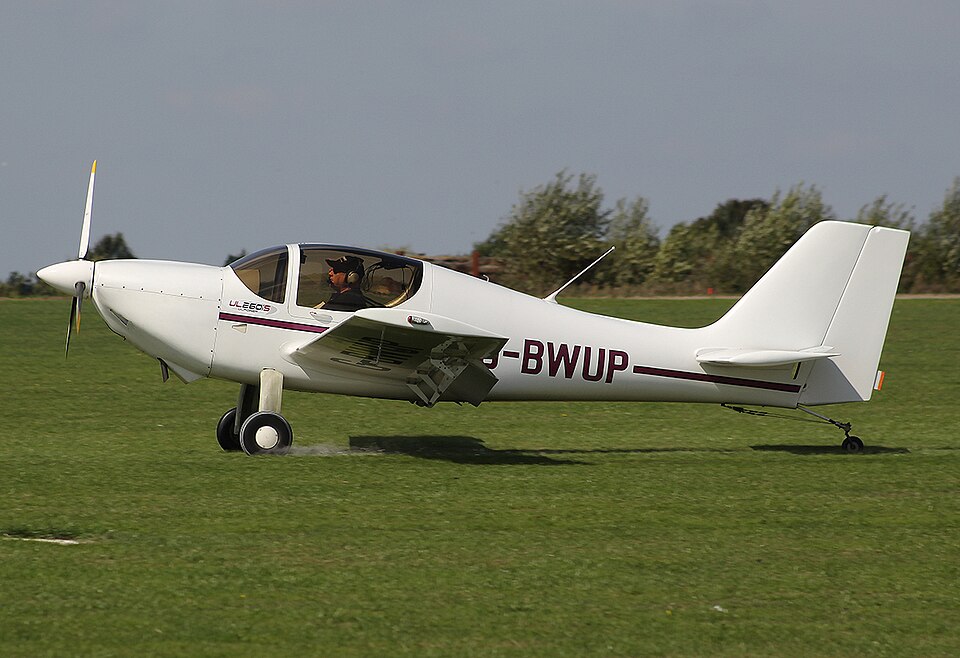
While being turned to line up for take-off, the tail wheel of Europa G-BWUP collapsed. The aircraft was brought to a halt and the engine shut down. Inspection revealed that the tail wheel spring rod attachment bolt had pulled through its hard point in the base of the rear fuselage, allowing the tail wheel assembly to rotate through 90°.
Description of Tail Wheel Installation
The main landing gear on most aircraft of this type consists of a mono-wheel mounted centrally under the cockpit, with two out-rigger wheels for lateral stability. G-BWUP had been modified to a conventional two-wheeled main landing gear configuration, removing the need for out-rigger wheels. The aircraft was originally designed with the tail wheel mounted on the underside of the rear fuselage beneath the fin. Manufacturer's Modification No 43, issued in 1997, provided a new tail wheel configuration positioned further aft to increase longitudinal stability on the ground. The wheel was attached via a spring rod to a hard point built into the underside of the rear fuselage. The hard point was constructed from layers of plywood interspersed with bi-directional glass-fibre cloth, with a steel plate bonded on top. The spring rod was bolted through this stack and additionally bonded to the fin structure. The collapse occurred when lateral force caused the spring rod to rotate about the aircraft's longitudinal axis, bending the bolt and crushing the plywood/glass-fibre layers, resulting in the wheel's plane of rotation becoming nearly horizontal.
Relevant Aircraft History
The Popular Flying Association (PFA), responsible for airworthiness, had no record of any prior incident with G-BWUP that might have weakened the installation. The kit manufacturer stated they were unaware of any weaknesses and had operated demonstration aircraft for years without apparent problems. However, the manufacturer was aware that ground-loop incidents could bend the spring rod attachment bolt. The PFA noted that several owners had opted to replace the steel plate with two light alloy plates bonded on either side of a Paxolin block, providing additional lateral support. This modification was PFA-approved and had been performed on six or seven mono-wheel aircraft. The manufacturer considered reinforcing the bolt support above the spring rod but rejected it, reasoning that loads sufficient to bend the bolt (e.g., during a ground loop) could cause hidden fuselage damage, whereas a bent bolt would be readily visible. The PFA inspector who modified G-BWUP to its current main gear configuration was asked about the tail wheel attachment modification, but it was never carried out.
Discussion
Although some owners modified their tail wheel attachments, the manufacturer provided a credible reason for not adopting that method. The circumstances that led to modifications on other aircraft are not known, but it is possible that operations from airfields with rough taxiways or runways increase damage risk. For aircraft modified to a conventional two-wheel main gear, differential braking may make them more susceptible to damage in rapid turns, such as encountering a rut or obstruction at a taxiway edge.