Incident Summary
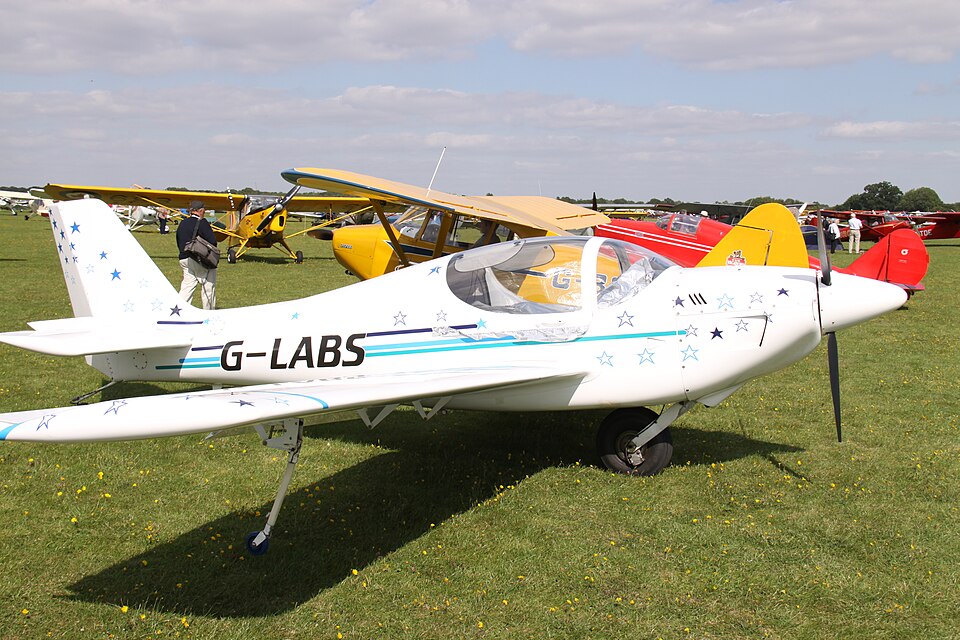
On 15 February 2003 at 1624 hours, a Europa aircraft, registration G-LABS, experienced an incident during landing at Fairoaks Aerodrome in Surrey. The aircraft sustained damage to its propeller and scratching to the left wing tip. Both occupants, wearing four-point harnesses, vacated the aircraft normally without injury.
Flight Details
The single-engine Rotax 912-UL powered aircraft, manufactured in 2002, was being operated on a private flight. The pilot, aged 53, held a Private Pilot's Licence with 304 total flying hours, including 8 hours on type. The flight was planned as a cross-country round trip from Hinton-in-the-Hedges, Northamptonshire, to Old Sarum, Wiltshire. The outbound leg was uneventful.
Navigation Issues
After engine start for the return flight, the Global Positioning System (GPS) failed to initialise. The pilot chose to continue using a map for navigation. Shortly after takeoff, the remote reading compass failed, and the pilot switched to a hand-held compass. Near Thruxton Aerodrome, the pilot set a course estimated at 050°M toward Didcot Power Station, but the actual course from Thruxton to Didcot is 025°M. After 30 minutes, the pilot realised he was lost and contacted RAF Brize Norton Radar for assistance. Brize Radar allocated a transponder code but initially could not identify G-LABS, which was reported at 1,500 feet amsl. Later, London Heathrow Special VFR Controller contacted Fairoaks ATC about an aircraft in the Ascot area. The Fairoaks controller learned from Brize that the lost aircraft was G-LABS.
Landing Incident
Spotting an airfield below, the pilot decided to make a precautionary landing. After Brize informed him the airfield was Fairoaks, he contacted the tower and received clearance to land on Runway 06. Surface winds were light from the north-east. The pilot described a normal touchdown, but during the landing roll a left swing developed. Despite applying right rudder, the aircraft swung hard to the right, ground looped, and pitched forward onto its nose before settling back. It came to rest by the side of the runway.
Weather Conditions
The weather over the route was generally fine with good visibility. The 1450 hours Heathrow METAR reported wind from 060° at 12 kt, visibility greater than 10 km, and overcast cloud at 1,900 feet. Temperature was +5°C with a dew point of 0°C, and QNH was 1035 mb. The direct track from overhead Thruxton to the observed position over Ascot would have been 070°M.