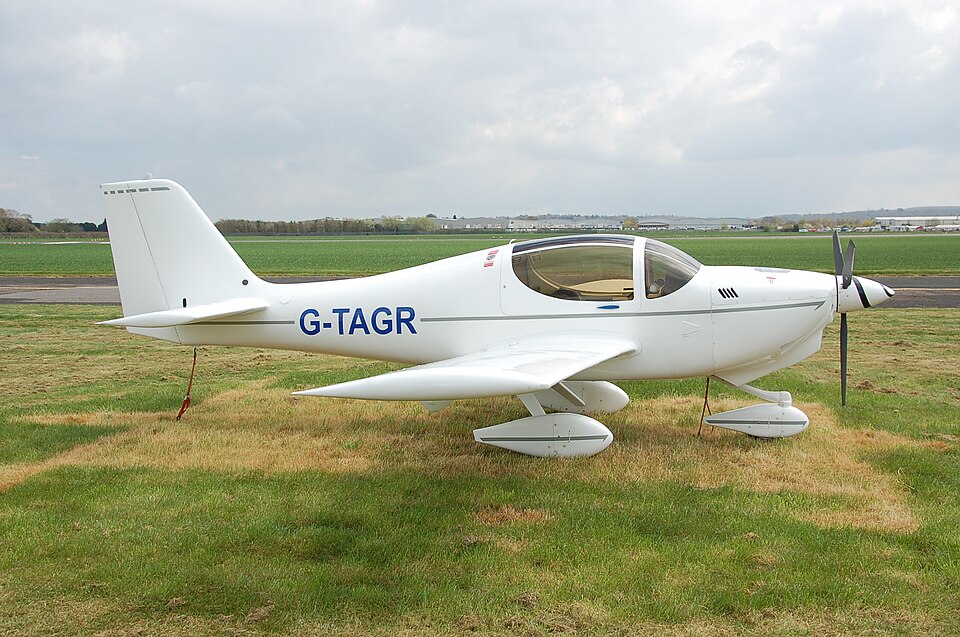
Accident Details
On 21 July 2006 at 1305 UTC, a Europa aircraft, registration G-TAGR, experienced an engine problem shortly after takeoff from RAF Syerston, Nottinghamshire. The aircraft was 1.5 miles west of the airfield when the pilot executed a forced landing in a crop field. The impact caused the nose landing gear to collapse and resulted in significant damage to the lower fuselage and wing mounts. Both the pilot and the single passenger were uninjured.
History of the Flight
The pilot, aged 57, held a Private Pilot’s Licence and had 394 hours of flying experience, with 29 hours on the Europa type. The previous evening, the pilot flew the aircraft to RAF Syerston to make use of the longer runway for a planned flight to Waterford, via Swansea. That 1.5-hour flight was uneventful except for a brief period of rough running when climbing through 2,500 ft.
On the day of the accident, the engine started normally and pre-takeoff power checks revealed no abnormalities. About 15 minutes later, takeoff was commenced. After rotation, the pilot noted the engine was producing only 5,100 rpm instead of the expected 5,500 rpm, but the aircraft climbed at 500 fpm and the engine ran smoothly. The pilot decided to continue with a gentle climb. As the aircraft passed 200 ft, the engine began to misfire and its speed decreased below 4,800 rpm. The pilot reduced power to 4,000 rpm, at which the engine ran smoothly, and the aircraft maintained altitude with 15° of flap. When the pilot attempted to climb to return to RAF Syerston, the engine failed to respond and misfired severely. Descending through 200 ft, the pilot turned into wind and identified a suitable field. Concentrating on maintaining flying speed, the pilot misjudged the approach and landed heavily with the aircraft in a slightly nose-down attitude. The upslope of the field contributed to the nose landing gear failure, and the nose and propeller struck the ground.
Investigation
The pilot built the aircraft in 2004 from a kit and installed an engine supplied by the airframe manufacturer. The engine had accumulated 51 hours and was maintained by Rotax-approved engineers. The Met Office provided an aftercast indicating an air temperature of 29°C and relatively high humidity, conditions conducive to carburettor icing at low power settings. The aircraft had been on the ground with the engine running for approximately 15 minutes before takeoff, at both low and high power, so some carburettor ice could have formed. However, the initial takeoff at high power appeared normal, and the possibility that ice built upon existing ice could not be fully discounted.
Fuel supply tests conducted by the owner after the accident confirmed that the fuel return line was clear and that fuel flow from each side of the tank exceeded twice the engine’s maximum consumption rate, despite some debris found in the fuel filter associated with the left lobe. The ignition system cables were free from cracking and visible damage.
Photographs showed that the fuel lines to and from the mechanical fuel pump were routed over the right inlet manifold, complying with the manufacturer’s build manual. The manual recommends insulating these lines to prevent heat transfer into the fuel, a recommendation introduced after several cases of fuel vapour lock during takeoff. The fuel lines on G-TAGR were un-insulated and constructed with braided steel reinforcement. Given the un-insulated lines in an area subject to significant heat build-up and the high ambient temperature, the possibility that the engine’s rough running and power loss was caused by a vapour lock interrupting fuel flow could not be dismissed.
Conclusion
The AAIB considered that fuel vapour locking, caused by the use of un-insulated fuel lines within the engine compartment, had caused the loss of power. The possibility of carburettor icing could not be fully discounted but was deemed less likely.