Introduction
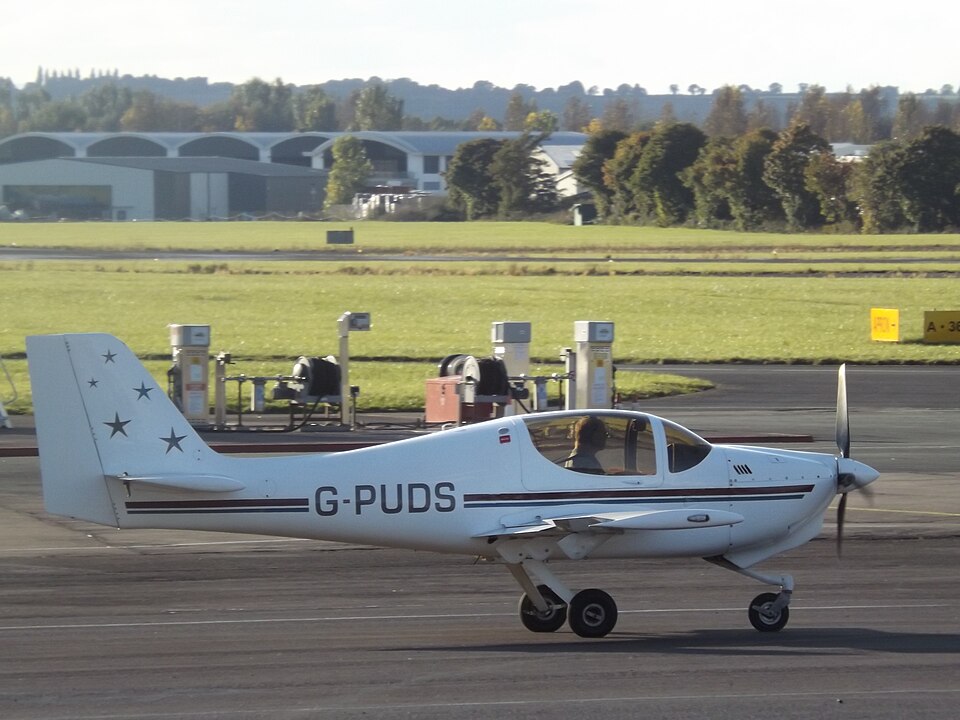
On 7 June 2005, a Europa tri-gear aircraft, registration G-PUDS, experienced a nose landing gear failure while landing at Curry Rivel, Somerset. The aircraft, built in 1997, was powered by a single Rotax 914T turbocharged piston engine. The flight was private, with only the pilot on board. The pilot, aged 69, held a Private Pilot's Licence and had 13,700 total flying hours, including 2 hours on type.
Sequence of Events
Two days prior, on a ferry flight from Cumbria to its new base at Curry Rivel, the aircraft made a precautionary landing in Herefordshire due to rising engine temperature and a coolant leak from a radiator joint. The crew left the aircraft and returned two days later with the owner. After temporary repairs, the pilot flew to Curry Rivel while the owner drove. On arrival, the flaps were found inoperative. The pilot conducted three approaches to assess handling. On the fourth approach, a gust of wind led to a firm landing. During the roll-out, the nose dropped, and the aircraft came to rest at the side of the runway, sustaining damage to the propeller and nose underside. The pilot was uninjured and exited without assistance. The nose wheel and fork assembly had detached and could not be found despite searches at both airfields. Marks on the grass indicated the wheel may have been missing before touchdown.
Examination and Findings
Examination revealed that the nose wheel fork attachment shaft, which was secured by a nut and rolled steel pin, had suffered significant distortion and shear failure. The shaft had two holes drilled at 90 degrees to each other; one was likely added during construction. Four cracks emanated from these holes. The damage was consistent with a severe overload, such as from a hard landing or striking an obstruction. Additionally, the flap system was found to have an unlabelled isolation switch in the wrong position; when moved, flaps operated normally. The switch was not shown in the build manual. The aircraft had no Permit to Fly at the time of the accident, as the flight test had not been completed.
Discussion
The nose wheel fork detached due to a simple overload failure of the shaft. The additional hole may have slightly weakened the shaft, but normal landing loads were unlikely to cause failure unless the fitting was loose. The detached assembly was not found, suggesting the failure occurred elsewhere, possibly during takeoff from Herefordshire. The inoperative flaps, caused by an unlabelled switch, likely added minor difficulty for the pilot, who was inexperienced on type. The owner had noted other discrepancies, including a non-standard propeller and a repaired nose leg fairing, but these were not relevant to the accident.