Incident Overview
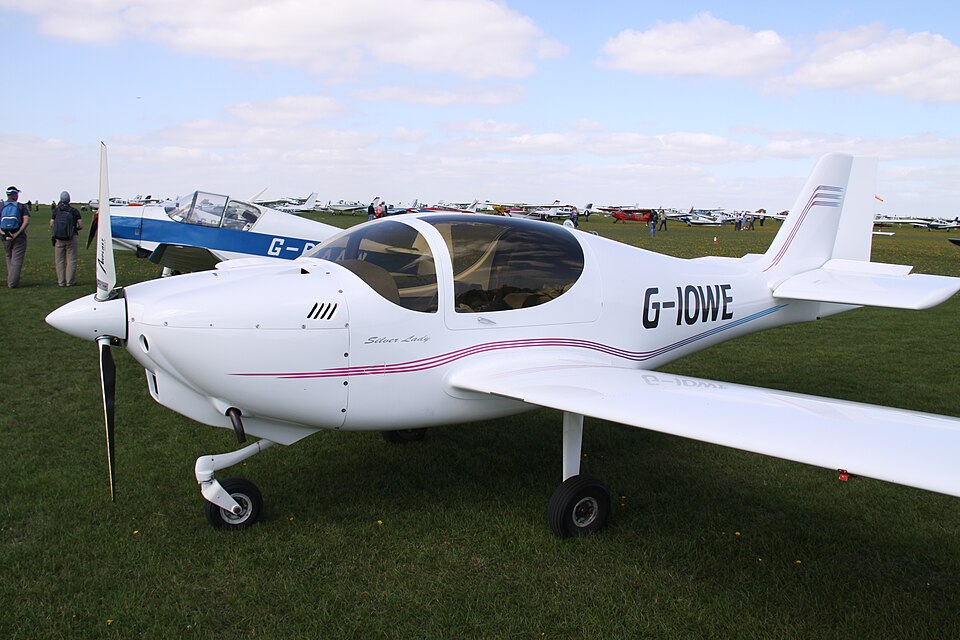
On 10 August 2001, at approximately 1137 UTC, a Europa XS aircraft, registration G-IOWE, experienced a loss of engine power shortly after takeoff from Wolverhampton. The aircraft was being flown by an 18-year-old private pilot with 52 hours total flying experience (2 hours on type). A safety pilot, who had 8,500 hours total (50 hours on type) and held a flying instructor rating, was also on board. No injuries were sustained, and the aircraft was undamaged.
Flight History
All pre-flight checks were completed satisfactorily. Engine start and taxi were normal, and power checks were performed per the checklist. During the takeoff roll and initial climb, no issues occurred until the aircraft reached approximately 100 feet above ground level. At that point, the engine began to surge and vibrate, losing nearly all power. The safety pilot took control, and as no suitable landing area was ahead, he executed a 40-degree turn to position the aircraft for a forced landing in a short, uphill cornfield. Upon landing, the engine stopped.
Engineering Investigation
After recovery, the aircraft owner examined the fuel system. All fuel lines, filters, and carburetor float chambers were inspected with no faults found. A fuel flow check revealed a restriction within the fuel flow transducer, which had been fitted between the fuel filter and the carburetors.
The transducer was sent to the AAIB for examination. It was a small unit manufactured in Germany, with an internal flow chamber diameter smaller than a £1 coin. Flow tests comparing the incident transducer to a new unit showed that the incident transducer restricted flow to one-third of the new unit's flow. Disassembly revealed that an internal inlet flow channel was partially blocked with unidentified debris. This channel was a curved slot tapering from approximately 0.85 mm at the inlet to 0.30 mm at the outlet. Additionally, magnets on the central revolving sensor were heavily coated with ferrous particles. The transducer had no bypass system.
No explanation was found for how debris, particularly ferrous particles, entered the transducer downstream of the fuel filter. The transducer was supplied as a sealed unit, and manufacturer's instructions cautioned against opening, loosening, or altering the transmitter.
Fuel System Modification and Approval
The fuel flow meter system had been approved by the Popular Flying Association (PFA) as a one-off modification for this aircraft. The owner decided to remove the system to prevent recurrence. The UK supplier was developing a bypass modification to prevent fuel supply restriction due to transducer blockage.
Fuel System Requirements
For light aircraft on the UK register, fuel system requirements are specified in JAR 23, JAR VLA, and BCARs Section S. JAR 23 and JAR VLA require that if a flowmeter is fitted, it must be blocked during a fuel flow test and fuel must flow through a bypass. BCARs Section S contained no technical requirements for fuel flowmeters.
Safety Recommendation
The AAIB issued Safety Recommendation 2002-38, recommending that the PFA ensure fuel flow transducers fitted to PFA 'Permit to Fly' aircraft types are either invulnerable to blockage by small particles or have an automatic remedial bypass mechanism to prevent fuel supply restriction.