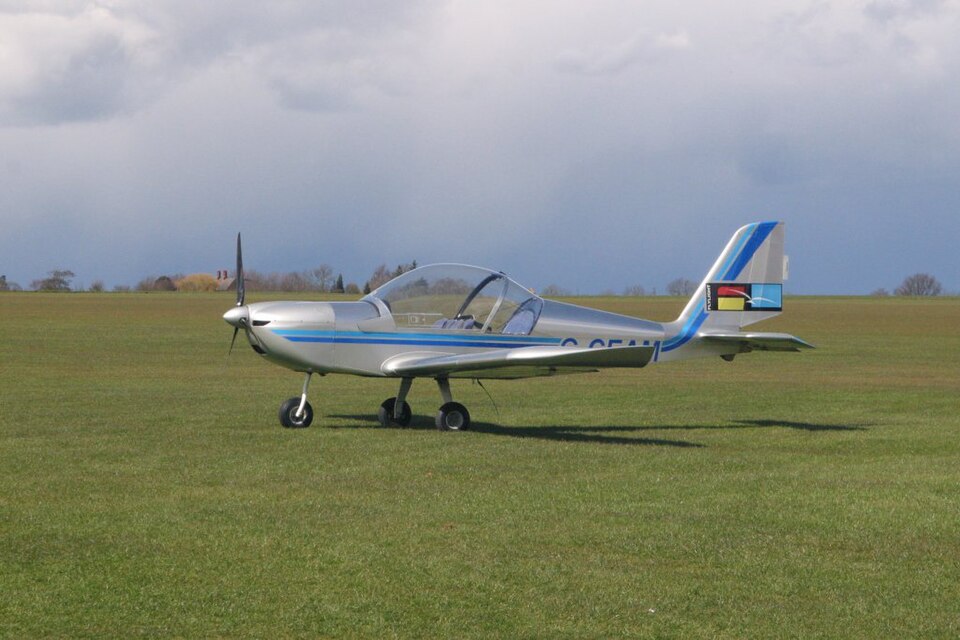
Accident Overview
On 29 June 2010 at 1255 UTC, an EV-97 TeamEurostar UK microlight aircraft, registration G-CEAM, sustained damage during a landing at Sywell Airport, Northamptonshire. The aircraft was manufactured in 2006 and powered by a single Rotax 912-UL piston engine. The flight was a private operation with only the pilot on board; no passengers were carried.
Flight and Approach
The pilot had completed a local flight and was making an approach to the grass Runway 23. The wind was reported as 10 knots from 270 degrees. The pilot selected two stages of flap and trimmed for 65 mph, a slightly higher speed than normal to allow for the crosswind. After crossing the threshold, the pilot closed the throttle and used the rudder to correct the drift angle.
Landing and Damage
The initial touchdown was smooth and on the mainwheels. However, the aircraft bounced into the air and subsequently landed on its nosewheel. This resulted in damage to the nose landing gear leg, the bulkhead to which it was attached, and the propeller tips. The pilot reported no injuries; the commander's National Private Pilot's Licence and flying experience (194 hours total, 63 on type) were noted.
Pilot's Comments
The pilot stated that, on reflection, the touchdown speed had been too high. He also noted that after the initial bounce, he should have either held the nose up to allow a subsequent landing on the mainwheels, or applied power and gone around. Following the occurrence, the pilot undertook additional instruction before flying solo again.