History of the Flight
The pilot planned a single circuit from a 500 m by 18 m grass airstrip at Bagber Farm, Dorchester, Dorset. The weather was CAVOK with a crosswind from the right of 6 to 8 kt. He applied full throttle and shortly after the aircraft began to veer left. He did not close the throttle. The aircraft continued left, left the runway, and entered a wheat field. The nosewheel collapsed, the propeller struck the ground, and the aircraft tipped forward, coming to rest inverted on the cockpit roof and upper wing surface. The pilot removed his harness and exited through the left door. About a minute later, he returned and turned off the fuel supply and master switch.
Aircraft and Pilot Information
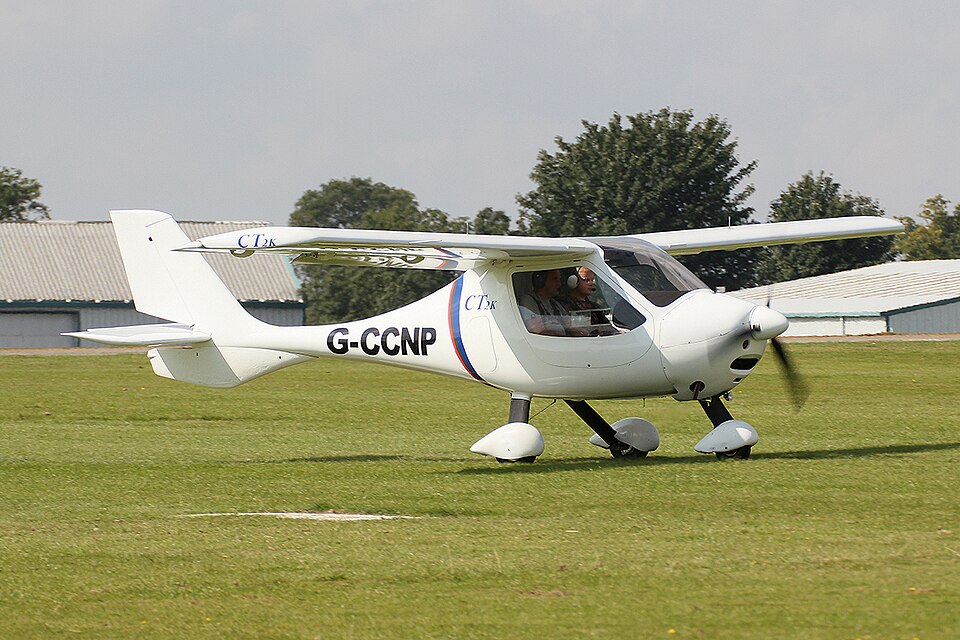
The aircraft was a 2004 Flight Design CT2K with a single Rotax 912ULS engine. The pilot held a National Private Pilot's Licence and was 69 years old with 577 total flying hours, including 164 hours on this type. In the previous 90 days, he had flown 30 hours; in the last 28 days, 22 hours. He had over 300 hours on flex-wing microlight aircraft.
Damage
The accident damaged the spinner, propeller, engine, and nosewheel assembly. There was compression damage at the base of the right wing, rudder damage, and abrasive damage to the windscreen.
Human Factors and Analysis
When power is applied for takeoff, the Flight Design CT2K tends to yaw left, which should be countered with right rudder. In flex-wing microlight aircraft, left yaw on the ground is controlled by pushing forward with the left foot to steer right. The pilot reported that events occurred quickly; he did not think to close the throttle and probably applied left rudder. This action, which would have been appropriate for flex-wing aircraft, exacerbated the left yaw. The pilot had not sufficiently considered his actions in the event of a rejected takeoff, and the throttle remaining open increased the pace of events, allowing the aircraft to veer off the runway with enough energy to overturn.