Accident Overview
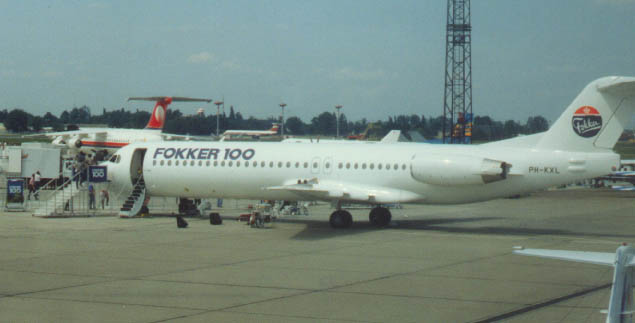
On a snowy morning, Palair Macedonian Airlines Flight PMK301, a Fokker 100 leased from Aircraft Financing and Trading (AFT) of the Netherlands, was destroyed when it crashed immediately after takeoff from Skopje Airport, North Macedonia. Fourteen of the 97 occupants survived the accident.
Flight Background
The aircraft had arrived on a scheduled flight from Frankfurt to Skopje at 09:40 local time with a 35-minute delay. A new crew arrived at approximately 10:30 and went straight to the aircraft. The AFT Director Flight Operations served as pilot-in-command, occupying the right seat and performing first officer duties as pilot not flying (PNF). He was also providing route instruction. A captain-under-training sat in the left seat, acting as captain and pilot flying (PF), receiving route training.
Pre-Takeoff Events
At the time, it was snowing lightly with a temperature of 0°C and dewpoint of -1°C. The dispatch officer checked both wing leading edges and found them uncontaminated by ice or snow, only wet from melted snow. The Flying Station Engineer (FSE) performed a walk-around accompanied by three Palair ground handling crew members. The ground crew asked if deicing was needed, noting snow on the right wing inner flap. The FSE replied that deicing was not necessary and that any deposit would blow off during takeoff.
The aircraft remained on the ground at Skopje for about 1 hour 35 minutes. At 11:05, start-up was approved, and the aircraft taxied to holding point Runway 34. During taxi, a Yak-42D from Vardar Air was deiced on the apron—the first aircraft deiced that day. Meanwhile, snowfall increased to moderate. According to the Cockpit Voice Recorder, the pilots did not discuss the weather conditions.
Takeoff and Crash
At 11:11, Palair 301 was cleared for takeoff with wind reported as 010° at 3 knots. The tower controller stated visibility was 900 meters and it was snowing. The aircraft rotated normally. The PNF called "positive," followed by the PF's call "gear up," confirmed by the PNF. Two seconds after liftoff, the aircraft experienced heavy vibrations and then a sudden right bank to approximately 10°, followed within 2 seconds by a left bank of approximately 50° and a right bank of 55° in sequence. Roll movements were counteracted with aileron and rudder. Approximately 10 seconds before impact, the PNF called "deselect," followed by the autopilot cavalry charge sound (twice) and the GPWS aural alert "sink rate" (twice).
The aircraft's right wingtip hit the ground 382 meters beyond the end of the runway with about 90° bank; the fuselage was nearly horizontal. The right wing disintegrated toward the wing-fuselage attachment, then the fuselage broke into three major parts. The right engine separated and penetrated the aft fuselage. The stabilizer and upper vertical tail plane also separated. Witnesses reported explosions shortly after impact and several residual fires among the debris.
Probable Cause
The Board determined that the impact with the ground in a steep right bank shortly after lift off was caused by a loss of roll controllability due to contamination of the wings with ice. This situation resulted from an omission to carry out spraying of the aircraft with deicing or anti-icing fluid in meteorological conditions conducive to icing, due to a lack of ice-awareness of the flight crew and the Flying Station Engineer. Contributing factors were a lack of common background and procedures in a difficult multi-sources operational environment.