Incident Overview
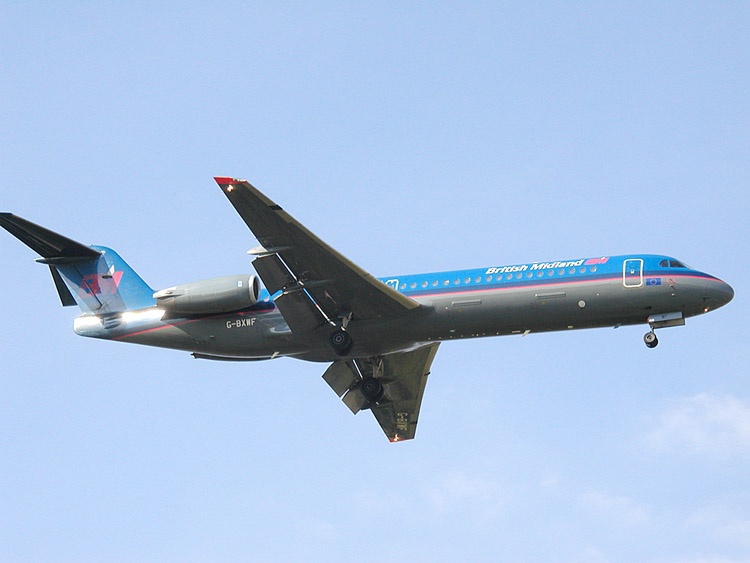
On 17 November 1999 at 1040 UTC, a Fokker F100, registration G-BXWF, operated a public transport flight from East Midlands Airport. The aircraft was climbing through approximately 4,000 feet when the crew heard a loud bang. About one minute later, smoke began entering the flight deck. The crew consulted with cabin crew to confirm the smoke was not originating from the galley immediately aft of the flight deck. Although the air conditioning system indications appeared normal, the crew concluded the problem likely involved the air conditioning system. The commander transmitted a PAN call and requested a diversion to Birmingham.
Descent and Landing
During the descent toward Birmingham, the smoke density fluctuated but did not impair the crew's ability to see or operate the flight deck systems. An overweight landing was performed without incident. Once the aircraft was parked, only a slight smoke haze remained in the flight deck. Passengers disembarked normally.
Post-Flight Inspection
After completing the overweight landing check, maintenance personnel inspected both left and right air-conditioning bays. No obvious signs of damage were observed. The auxiliary power unit (APU) was started, and both air conditioning packs were operated. Both packs appeared normal except for a large amount of water draining from the left pack's air cycle motor (ACM) drain. After the APU was shut down, the left pack ACM was inspected and found to rotate freely. The coalescer bag from the water separator unit was blackened and saturated, and the screen at the inlet from the cool air mixing inlet duct had ruptured. The left ducting was reinstalled, and an inspection of the right pack revealed no abnormalities.
Component Examination
The aircraft returned to its maintenance base, where the left air conditioning pack's ACM, water separator, and duct were replaced and sent to the manufacturer for examination. The aircraft subsequently operated without further air conditioning faults. Examination of the returned components by the manufacturer confirmed that the water separator assembly had several faults: a coupling nut had been lost, rendering the coupling unserviceable. Additionally, the by-pass valve was found to be unserviceable, and the condenser shell was corroded.