Introduction
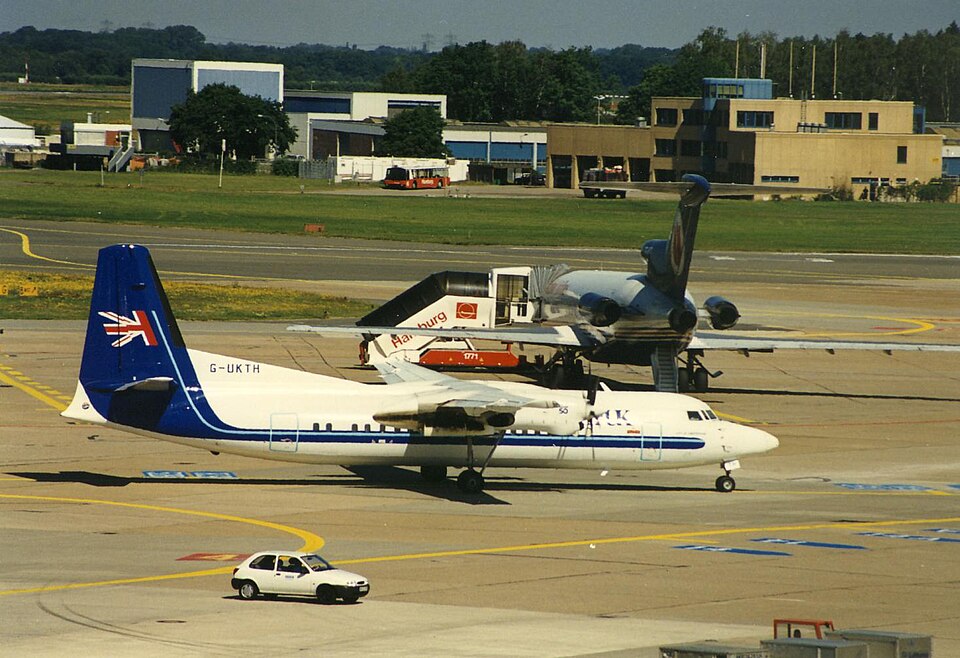
On 17 May 1999, a Fokker F27 Mark 050, registration G-UKTH, was preparing for departure from London Stansted Airport on a public transport flight. The aircraft had 4 crew and 18 passengers on board. During prior sectors, the left wheel brakes had exhibited a tendency to 'snatch', which was reported by the incoming crew. After a visual examination and discussions with ground engineering staff, and noting that the aircraft had already operated four sectors in that condition, the commander decided to accept the aircraft. The first officer and cabin crew were informed of the brake issue.
Evacuation
Engine start was normal, although the right engine start was delayed until after pushback due to a strong wind from directly behind the aircraft on the stand. During taxi, with the first officer handling, the brakes were tested and functioned normally. However, due to a strong gusting tailwind, additional power was used during taxi, with brakes applied to maintain speed. After stopping at holding point HA with the park brake applied, the No 2 cabin crew member reported a fire on the left wheels. The commander ordered an evacuation and instructed the first officer to carry out ground evacuation drills. ATC was informed of the brake fire. Electrical power was switched off and emergency lights activated. The commander saw that the outer left mainwheel tyre had deflated and a small fire was burning around the outer brake unit. He decided not to activate the engine fire extinguishers. All passengers and crew evacuated without injury. The fire extinguished before Airport Fire Service arrival. The commander later re-entered the aircraft to fit landing gear pins, and passengers were allowed to retrieve personal effects.
Examination of the Brake Unit
Operator engineering staff assessed the cause of the brake fire as a faulty brake unit. Further investigation revealed that the brake pack was seized and the piston seals had disintegrated, allowing brake fluid to leak onto the hot brake unit, initiating the fire. The left anti-skid valve was tested and found satisfactory. The brake control valve was submitted for manufacturer tests; results were pending. The same brake unit had been involved in a previous incident with G-UKTH on 27 October 1998, when a crosswind landing caused the left main outer tyre to deflate due to energy absorption by the brake. No fault was identified at that time.
Operator Action
On 2 July 1999, the operator's Fleet Manager issued NOTAC 09/99, referring F50 crews to relevant Operations Manual sections and advising the use of reverse thrust when taxiing with a tailwind to reduce brake overheating risk.