Incident
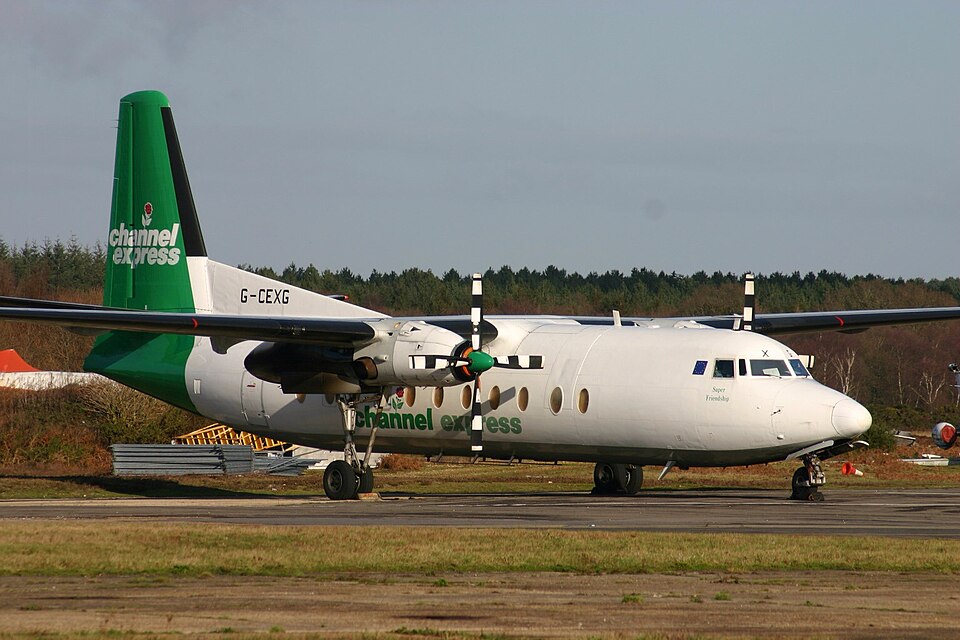
On 7 May 2004 at 0405 UTC, a Fokker F27 Mark 500, registration G-CEXG, operated as a public transport cargo flight, departed the taxiway at Bournemouth Airport, Dorset. The crew, consisting of two pilots, had reported for duty at 0300 hours expecting to operate a two-sector return freight flight to Jersey. As they approached the aircraft, they noticed the pneumatic system being charged, which was not normal procedure. Engineers explained that this was a fleet-wide procedure following pneumatic problems on another aircraft.
The first officer entered the flight deck and asked an engineer about a potential pneumatic leak. Although told there was none, he noted that the brake bottle pressure was slightly lower than normal. Suspecting the integrity of the pneumatic system, he pulled out the pneumatic isolating valve pin, contrary to the checklist requirement that it be pushed in. He did not inform the commander of this action.
After engine start, the after-start checklist required a pneumatics check, but the isolation pin remained out. During taxi, the crew observed abnormally low pneumatic pressures, though still within the acceptable green band. Shortly thereafter, the aircraft veered left. Despite full right steering wheel input and right brake application, directional control was lost. Realizing the isolating valve pin was out, the commander pushed it back in, but could not prevent the aircraft from leaving the taxiway and traveling 50 meters across grass before stopping. No attempt was made to activate the emergency braking system. The commander noted that his left hand was fully engaged holding the steering wheel, and removing it to operate the emergency brakes would have been necessary.
The engines were shut down and engineering assistance sought. An emergency was not declared, but air traffic control subsequently alerted emergency services. An unsuccessful attempt to tow the aircraft forward with the engines running was made, though this is not recommended due to potential nose landing gear damage. The aircraft was eventually recovered from the grass tail first.
Technical Background
The Fokker F27 has two separate pneumatic systems: main and emergency. The main system supplies pressure for landing gear operation, nose wheel steering, and wheel brakes. The emergency system provides alternate landing gear extension and emergency brakes. Storage bottles with check valves maintain pressure in case of compressor supply interruption. Pulling the pneumatic isolating valve pin isolates the main system and its storage bottle from the main pneumatic supply, preserving stored pressure in a leak. However, in the isolated position, neither the landing gear, nose wheel steering, nor wheel brakes can be operated from the main system supply. The emergency braking system, controlled by a knob on the left cockpit side panel, delivers a preset pressure without anti-skid control or differential braking capability.
Crew Actions and Checklists
The after-start checklist included a pneumatic check item. The expanded version in the Operations Manual required checking all three pneumatic gauges, confirming minimum pressures (brake 1500, main 1500, emergency 2500), ensuring the pneumatic isolating valve was in, and that both low pressure warning lights were out. The first officer's action to pull the isolation pin was contrary to this checklist. The commander, unaware of the pin's position, did not verify it during the pneumatics check. The crew's doubt about the pneumatic system, stemming from the abnormal charging, may have been alleviated with advance notice of the engineering procedure change.
Aftermath
Following the incident, the company revised its checklist procedure. The after-start checklist now includes a separate specific check to confirm the isolating valve pin is pushed in. Two safety recommendations were issued: Safety Recommendation 2004-78, urging the UK Civil Aviation Authority to bring the incident to the attention of all UK F27 operators, and Safety Recommendation 2004-79, urging the Director General of Civil Aviation of the Netherlands and type certificate holder Stork B.V. to notify all other F27 operators.