History of Flight
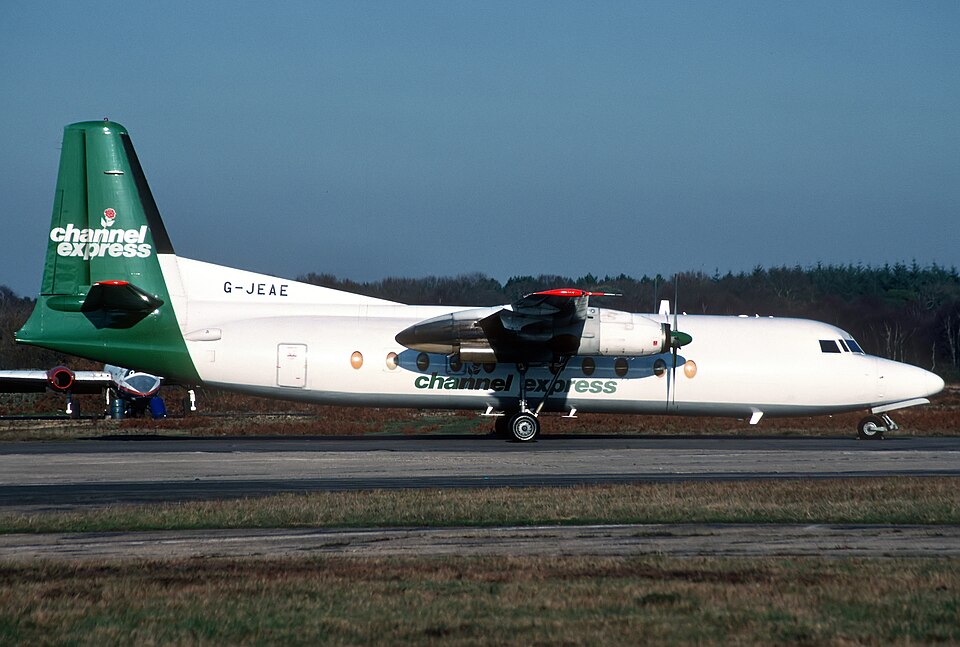
The aircraft was on radar vectors for an ILS approach to Runway 05 at London Stansted Airport. The commander, acting as handling pilot, had completed the landing checklist with 26° flap and landing gear down. At 900 feet amsl, the aircraft was above the glideslope with an indicated airspeed of about 150 kt. The commander retarded the power levers to flight idle to correct this. Immediately, there was a marked increase in propeller noise and rapid deceleration. Both pilots observed that the two amber 'Flight Fine Unlocked' lights illuminated, and the commander noted that both red 'Prop Below Lock' lights also illuminated. The commander attempted to push the power levers forward but they would not move, feeling as if they had encountered a mechanical baulk. He released the power levers to operate the 'Throttle Lock Selector' and also selected the landing gear up to reduce drag. When he returned his hand to the power levers, they moved forward without restriction, the propellers responded normally, and the aircraft began to climb. After completing after takeoff checks, the crew discussed the event and believed that ground fine pitch could not be selected in flight due to 'weight-on-wheels' protection. The aircraft was vectored for another ILS approach. The commander, wary of retarding power too far, maintained at least 140 kt until over the runway threshold. The aircraft went through the localiser and was above glideslope, so a missed approach was executed from 2,000 feet amsl. For the next approach, the commander requested an 8 nm final, planned for 16° flap with VREF 105 kt, but later switched to 26° flap and VREF 100 kt. The first officer suggested isolating the 'Flight Fine Pitch Stop' (FFPS) electrical circuit until landing; this was agreed. The final approach was uneventful, and the aircraft landed without further incident. The isolating switch was returned to normal after touchdown, and ground fine pitch was selected for deceleration.
Flight Recorder Analysis
The 30-minute cockpit voice recorder (CVR) and 25-hour flight data recorder (FDR) were replayed. The CVR had low incoming RT levels but was otherwise serviceable. The FDR recorded five parameters but did not include engine or propeller data. The recordings were synchronised using common events. They confirmed the flight was uneventful until about 500 feet agl, when a sound consistent with a power lever being lifted and moved rearwards into the ground fine pitch (gfp) position was captured. Significant turbulence (variations of ±0.6 g) was present. The commander was heard saying "WHY WON'T THAT MOVE" and later "IT'S STUCK IN REVERSE". Spectrum analysis showed engine speed dropped from 10,750 rpm to 7,800 rpm. Propeller pitch had moved to the 0° stop. At about 190 feet agl, 15 seconds after gfp selection, a sound consistent with undercarriage lever movement was recorded, followed by a GPWS "TOO LOW GEAR" alert. Height decreased to 85 feet agl, then engine speed increased. Minimum height recorded was about 25 feet agl near the perimeter track crossing the undershoot of Runway 05.
Propeller System and Examination
The aircraft was equipped with two Rolls-Royce Dart 532-7 turboprop engines driving four-blade hydraulically operated constant-speed propellers. The propeller system includes a ground fine pitch stop (0°), a flight fine pitch lock (20°), and an electro-hydraulic 'auto coarsening' stop. The RPM control levers on the centre pedestal are mechanically linked to control boxes. To select ground fine pitch, the levers must be brought to idle, lifted against a spring, and retarded through about 13°, energising solenoids that remove the flight fine pitch locks. This motion is not inhibited by weight-on-wheels logic in the F27 design, contrary to some crew beliefs. Examination of G-JEAE revealed that forward movement of each RPM control lever while lifted is limited by a baulking lug interacting with a flange. If the levers were gripped in a particular way, the lugs could interfere, creating a throttle jam impression. Releasing grip allowed springs to move lugs below flanges, enabling forward movement. Force measurements showed the right lever required only 5 lb out of detent force, below the typical 7-7.5 lb range.
Past Incidents
A review of occurrence databases found numerous F27 accidents and incidents involving the propeller control system over the years, but none resembling this specific incident.
Meteorological Conditions
A weak cold front east of the airport under a slack isobaric trough produced winds at 1,000 feet of 100°/8 kt. The crew reported light turbulence in the lower cloud layer.