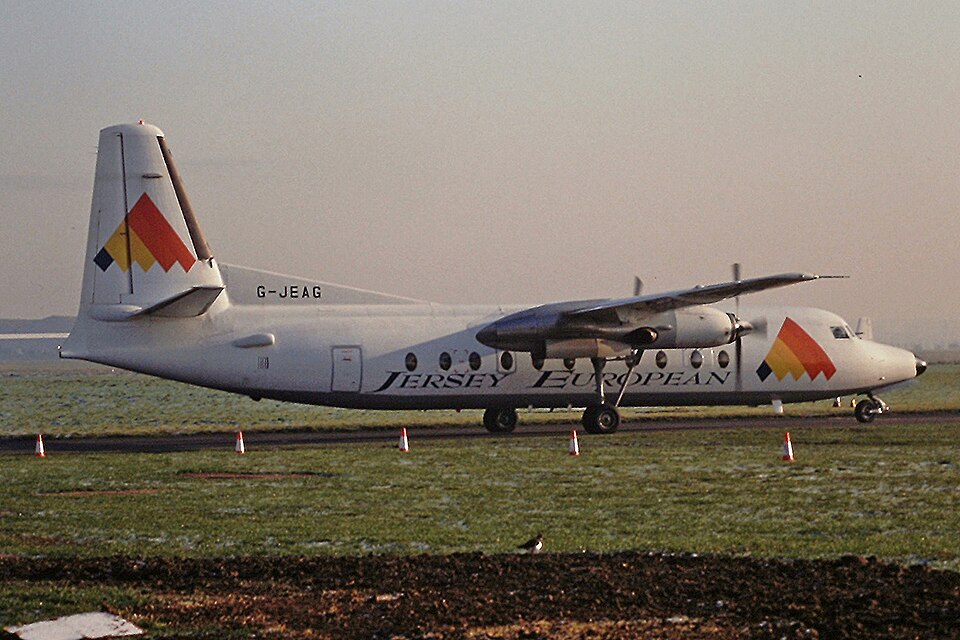
Incident Overview
On 26 May 1999, a Fokker F27 Mark 500, registration G-JEAG, was involved in an in-flight event during a public transport flight from Belfast. The aircraft, manufactured in 1981 and powered by two Rolls-Royce Dart 532-7 turboprop engines, had three crew members and 15 passengers on board. No injuries were reported, and the aircraft sustained no damage.
Sequence of Events
Shortly after takeoff from Belfast, the captain noticed an unusual smell, initially attributed to a fuel spillage that had occurred earlier. After checking the cabin and flight deck heating systems, and while passing flight level 80 during the climb, the captain observed and smelled smoke emanating from the area between himself and the left panel switches. He immediately announced 'smoke in the cockpit', prompting both pilots to don their oxygen masks and perform memory drills.
The captain ordered the cockpit heater to be switched off and attempted to identify the type of smoke. Shortly thereafter, the smoke dissipated, although the smell persisted. As a precaution, an emergency was declared, and the aircraft was diverted back to Belfast, where it landed without further incident.
Investigation Findings
Following the event, maintenance personnel inspected the electrical wiring on the captain's side and conducted engine ground runs. These checks were satisfactory, and no smoke was observed, leading to the defect being cleared. However, the problem recurred and was subsequently recorded as an Acceptable Deferred Defect. On 4 June 1999, the defect was resolved by replacing the cockpit heater. Examination revealed that a burnt-out heater element had been responsible for the burning smell.
A search of the CAA Mandatory Occurrence Report (MOR) database identified one other instance of smoke originating from a cockpit heater element, indicating a rare but known issue.
Conclusion
The smoke and smell in the cockpit were caused by a burnt-out element in the cockpit heater. The crew's prompt actions ensured a safe return and landing.