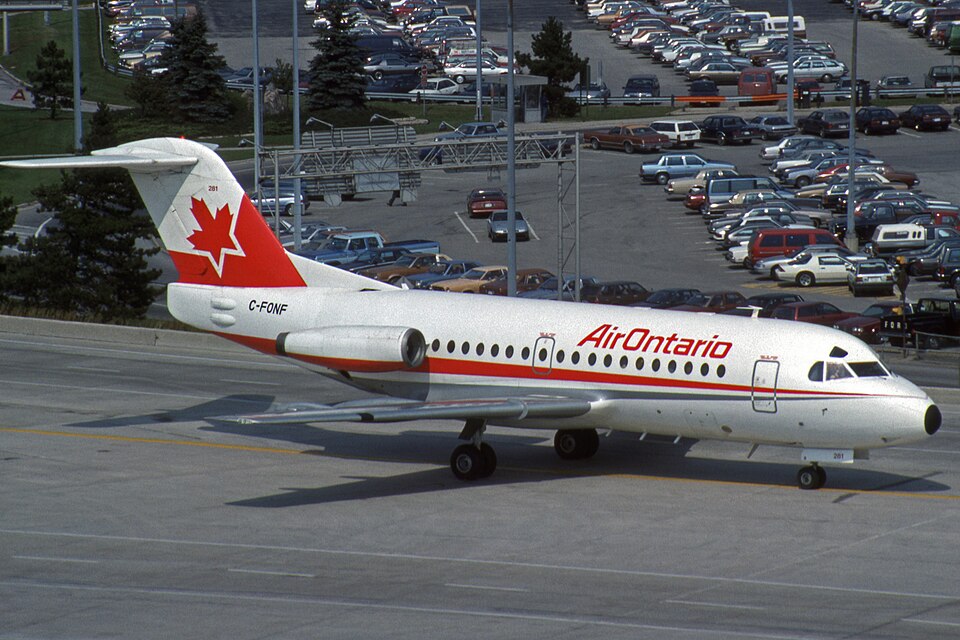
Accident Overview
On March 10, Air Ontario Flight 1363, a Fokker F-28 jet registered as C-FONF, crashed during takeoff from Dryden Municipal Airport in Ontario, Canada. Of the 69 persons on board, 24 suffered fatal injuries. The aircraft had a malfunctioning auxiliary power unit (APU) for the five days preceding the accident.
Background and Preceding Events
Throughout the week before March 10, Air Ontario maintenance attempted, with limited success, to fix the APU problems. On March 9, it was decided to defer the repair until the aircraft returned to Toronto on the night of March 10. The aircraft was dispatched with the APU inoperable. On the morning of March 10, C-FONF departed Winnipeg on a round trip flight to Dryden and Thunder Bay and back as flight 1362/3. Since no external power unit was available at Dryden, the engines could not be restarted if shut down on the ground.
The flight to Thunder Bay was uneventful apart from a slight delay due to poor weather. As the aircraft was prepared for the return flight, it appeared overweight because ten additional passengers had transferred from an earlier cancellation. The Air Ontario duty manager decided to off-load fuel and arrange refuelling at Dryden, causing an additional 35-minute delay. The Fokker F-28 departed Thunder Bay at 11:55 EST, about one hour behind schedule.
Events at Dryden
The aircraft landed at Dryden at 11:39 CST. It began to snow lightly upon landing. Between 11:40 and 12:01, Air Ontario 1363 was refuelled with the right engine operating and passengers remaining on board—a hot refuelling procedure used because the APU was unserviceable. Eight passengers deplaned, and seven boarded. Snow accumulated on the wings, forming a layer of 1/8 to 1/4 inch. No de-icing was performed because de-icing with either engine running was prohibited by both Fokker and Air Ontario.
The aircraft taxied to runway 29 for departure but was instructed to hold as a Cessna 150 approached. Snow continued falling heavily, accumulating on the wings. At 12:09, the aircraft began its takeoff roll on the slush-covered runway. There was at least one-half inch of wet, layered snow on the wings as it started its takeoff roll.
Takeoff and Crash
After a longer than normal takeoff roll, the aircraft was rotated near taxiway Alpha, approximately at the 3500-foot mark. It lifted off slightly, began to shudder, then settled back onto the runway. The takeoff roll continued, and the aircraft was rotated a second time, lifting off at approximately the 5700-foot mark of the 6000-foot runway. It flew over the runway end about 15 feet above the ground. It then failed to gain altitude and mushed through the air in a nose-high attitude before striking trees. The aircraft crashed and came to rest in a wooded area 3156 feet past the runway end and caught fire.
Probable Cause
According to official findings, the captain, as the pilot-in-command, must bear responsibility for the decision to land and take off in Dryden on the day in question. However, it is equally clear that the air transportation system failed him by allowing him to be placed in a situation where he did not have all the necessary tools that should have supported him in making the proper decision.