Synopsis
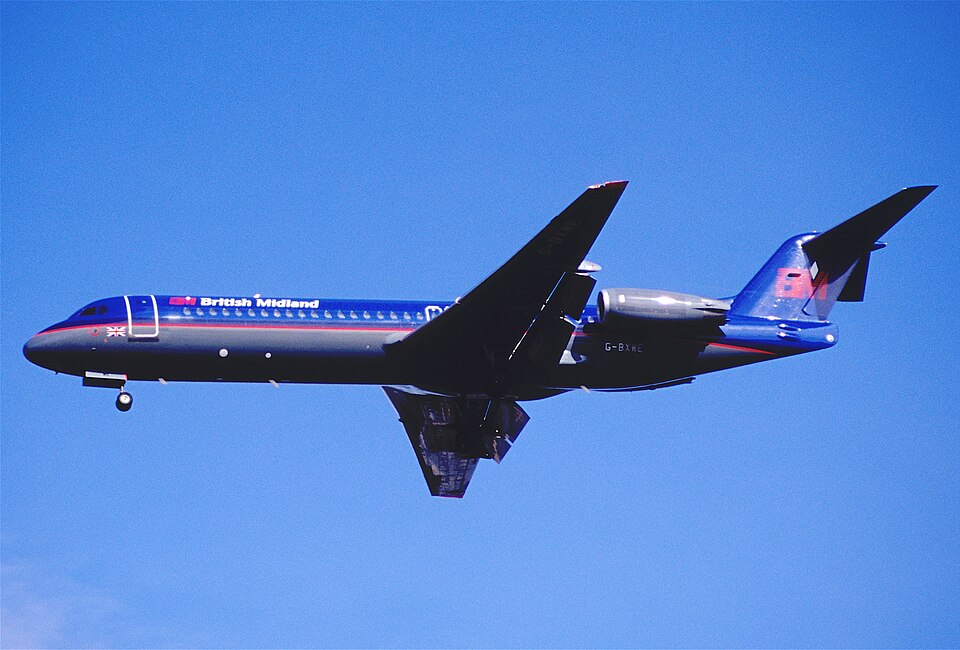
The incident involved a Fokker F28 Mark 0100, registration G-BXWE, during a scheduled passenger flight from Brussels to London Heathrow on 14 August 2004. After recycling the landing gear and performing the alternate lowering procedure, the crew landed with a nose landing gear unsafe indication. The aircraft landed without incident; the nose landing gear indicated safe during the landing roll. Subsequent engineering investigations revealed that the Aircraft Maintenance Manual (AMM) procedure for checking the nose landing gear downlock plunger clearance was ambiguous, in that it did not make it clear that it is necessary to apply a rearward force on the nose landing gear when checking the clearance. It is believed that this caused the nose landing gear downlock to be misrigged. In response to the airline's recommendation, the aircraft manufacturer agreed to amend the AMM procedure.
History of Flight
The aircraft was on a scheduled passenger flight from Brussels to London Heathrow. When the landing gear was selected down on final approach, the nose landing gear 'down and locked' green light failed to illuminate, accompanied by landing gear unsafe visual and aural warnings. A go-around was flown and the landing gear was recycled, but the same warnings recurred. The Quick Reference Handbook procedure for alternate landing gear lowering was carried out, with the same result. The crew advised the cabin crew and passengers and contacted ATC. The aircraft proceeded to the Biggin hold, where the crew discussed the problem with operations and engineering. Following advice, the crew declared a 'MAYDAY' and briefed for a landing with gear up/unsafe condition. On final approach, the nose gear unsafe warnings recurred and at about 1,000 feet the red 'LG NOT DOWN' message appeared. The tower advised that all three gear appeared down. The aircraft landed normally and slowed using emergency maximum reverse thrust, with normal braking only below 10 kt. The aircraft stopped on the runway and passengers disembarked via steps; the aircraft was recovered to the hangar.
Flight Recorder Data
The aircraft was equipped with a solid state flight data recorder (SSFDR) and a solid state cockpit voice recorder (SSCVR). Data for the final approach showed that at about 2,000 feet, with autopilot and autothrust engaged, the aircraft turned onto a heading of 270° and established the localiser and glideslope. Left and right main gear indicated down and locked; nose gear was in the up position. At about 920 feet radio altimeter, a master warning was recorded. The autopilot was disengaged at 131 kt. At 50 feet RA, airspeed was 127 kt. Ten seconds later, at 124 kt, left and right weight on wheel parameters were momentarily recorded. Over the next seconds, pitch attitude changed slightly. Reverse thrust was selected. The nose gear was recorded in the down position after the aircraft was on the ground, and the master warning ceased.
Nose Landing Gear Downlock Operation
The nose landing gear on the Fokker F28 Mark 0100 is of the forward-retracting type. It is locked in the down position by a spring-loaded plunger mounted on top of the leg. During gear extension, the plunger contacts a ramp on the downlock bracket, compressing the plunger. When fully down, the plunger lines up with a hole at the base of the ramp and extends under spring pressure, locking the leg. Extension triggers proximity sensors to illuminate the green light. The downlock bracket is shimmed to ensure the plunger is centrally located. If clearance is incorrect, the plunger may not fully extend due to friction, preventing sensor triggering.
Engineering Investigation
Examination by the AAIB established that after the aircraft stopped on the runway, the nose gear green light was illuminated, corroborating flight data that the gear locked during rollout. Hangar troubleshooting, including indication system tests and gear retraction/extension tests, found no defects. The downlock plunger clearance was measured and reported satisfactory; the aircraft returned to service. During a subsequent base maintenance check between 19 and 28 September 2004, the clearance was rechecked and found outside the AMM limits of 0.003 to 0.020 inch. Shimming was adjusted to bring it within limits. According to the manufacturer, too small a clearance increases the chance of the plunger not fully engaging due to friction from misalignment. A year earlier, on 26 September 2003, the aircraft had experienced a similar unsafe condition, but troubleshooting found no defects. The airline's Engineering Quality Department noted that the AMM procedure for checking clearance was ambiguous, as it did not clarify the need to apply a rearward force on the nose gear. Failing to do so results in an incorrect measurement. The nose gear on G-BXWE was replaced in June 2003 after a towing incident; it is thought that the downlock plunger clearance may not have been correctly rigged due to the procedural ambiguity, which could also explain why no anomalies were found during troubleshooting after the events.
Follow-up Action
In response to the airline's recommendation, the aircraft manufacturer agreed to amend AMM subtask 32-21-01-220-024-A00 and task 32-21-01-200-836-A to include a step clarifying that a second person is required to apply a rearward force to the nose gear when measuring the downlock plunger clearance.