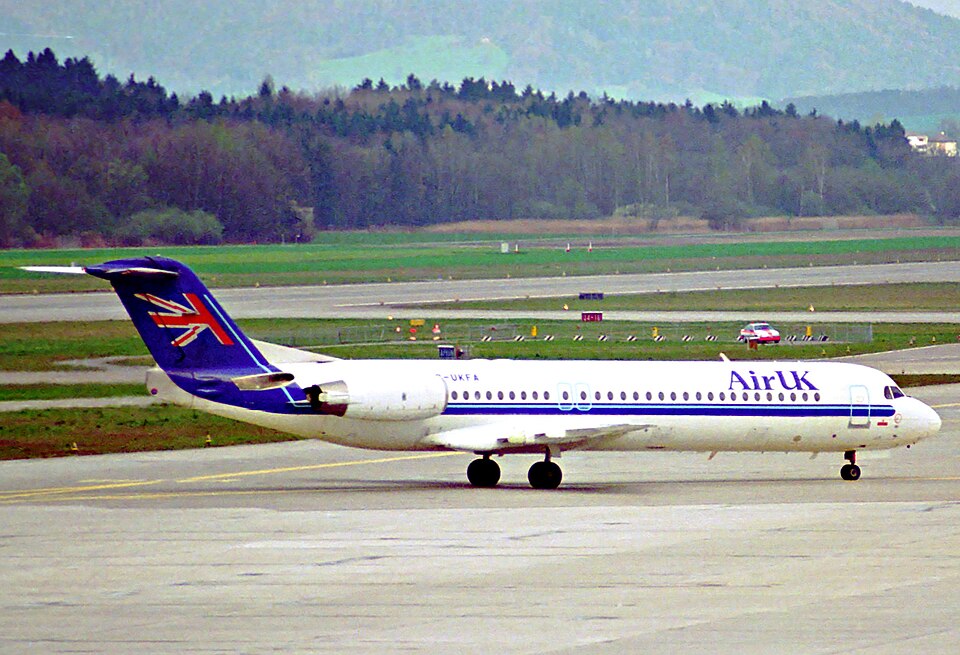
Incident
On 18 August 1999, a Fokker F28 Mark 0100, registration G-UKFA, was operating a scheduled passenger flight from Belfast to Amsterdam. While cruising at Flight Level 330, the cabin crew detected a burning smell and discovered a warm area on the left side of the cabin floor behind the forward main passenger door. The First Officer confirmed the finding, prompting the Captain to decide to divert to Leeds-Bradford Airport (LBA) for further investigation. As a precaution, a PAN call was made to expedite descent and diversion.
Diversion and Inspection
The Captain chose Leeds-Bradford because he and two cabin crew members were based there and were familiar with the airport. A normal ILS approach and landing was performed on Runway 32, after which the aircraft was turned into the wind on the loop at the Runway 14 threshold. Airport fire services met the aircraft and used thermal imaging cameras, quickly informing the crew that there was no fire; only a warm area around the avionics bay was identified. The avionics bay was opened and confirmed free of fire. Passengers remained on board with seat belts undone during the inspection. After a thorough examination by the fire service, the aircraft taxied to the stand, where passengers disembarked.
Company engineers conducted a detailed check, including inspection for duct or pipe leaks. The warm floor area was located above the electronics bay, where some electrical wiring ran under the carpet; no damage to the wiring was found. The aircraft was cleared for return to service after a final ground run. However, on the subsequent flight to Amsterdam, when cabin crew requested increased heating, the same hot oily smell reappeared. Reducing the air conditioning eliminated the odor.
Subsequent Findings
A follow-up examination of the air conditioning system revealed oily contamination of the coalescer (water separator) bags. These bags were replaced, and the problem did not recur. The Captain stated his belief that the oily contamination was the source of the smell, and that the crew's perception of an abnormally warm floor was influenced by the burning smell, which actually originated from the air conditioning system. The incident flight had been the first time the air conditioning temperature was turned up from fully cold, as the weather had been warm.