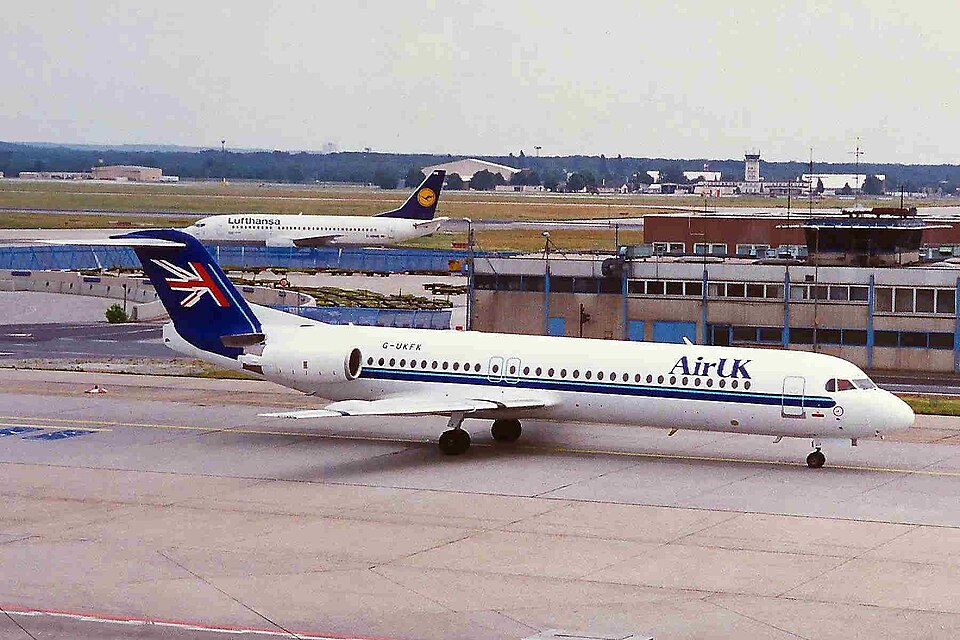
Incident Overview
On 13 October 1997 at 0705 UTC, a Fokker F28 Mark 0100 (registration G-UKFK) departed from Amsterdam Schiphol Airport on a public transport flight with 5 crew and 100 passengers. The aircraft, powered by two Rolls Royce Tay 620-15 turbofan engines, was manufactured in 1988. Shortly after departure, while climbing through flight level 60 in instrument meteorological conditions with the autopilot disengaged, the aircraft encountered small hail precipitation. The weather radar indicated no hard core within 5 nm. The aircraft then sustained a lightning strike.
Observations and Crew Actions
Cabin crew reported seeing what they described as fire-balls in the cabin, originating at the front and apparently exiting near the overwing emergency doors. In the cockpit, the captain observed master caution lights and warnings for EL 1 and EL 2 on the multi-function display unit, indicating hydraulic pressure loss in both left and right elevator hydraulic control units. The crew's checklist instructed them to press the illuminated push buttons on the overhead hydraulic panel for each failed system. This action placed the corresponding hydraulic elevator boost systems in bypass mode, removing all hydraulic boost from the elevator control and reverting it to manual operation with altered gearing. The crew followed the checklist and elected to return to Schiphol, performing an uneventful landing in manual elevator mode. The commander noted that flying with manual elevator 'felt a bit peculiar'. The commander, aged 42, held an Airline Transport Pilot's Licence and had 10,500 total flying hours, including 2,600 on type.
Examination and Findings
Post-flight examination revealed the lightning had routed through the aircraft between the nose and the elevators. Damage included various rivets on the left side of the nose, a missing outer static discharger on the right stabiliser, additional small missing part of the right stabiliser, a pitot head with small residual welded metal pieces, dents on the fuselage top, and two electrical switches in the elevator system ceasing to function. Specifically, both elevator boost system Sequence Valve Proximity Switches (bypass switches) on the left and right manifold assemblies of the elevator hydraulic boost controller suffered functional failure. These switches normally signal hydraulic pressure loss to the Flight Warning Computer, Flight Control Computer, and maintenance panel when the associated sequence valve moves to the shut-off position. The fault conditions in each proximity switch caused the Flight Warning Computer to receive signals identical to actual pressure loss in both systems, even though no valve movement occurred and hydraulic pressure remained available. The crew's correct response to the false warnings caused the pilot valves to close, switching off the serviceable boost systems and leaving the elevator in manual mode. Analysis of ground-based lightning recording equipment did not reveal major discharges at the relevant time or place.