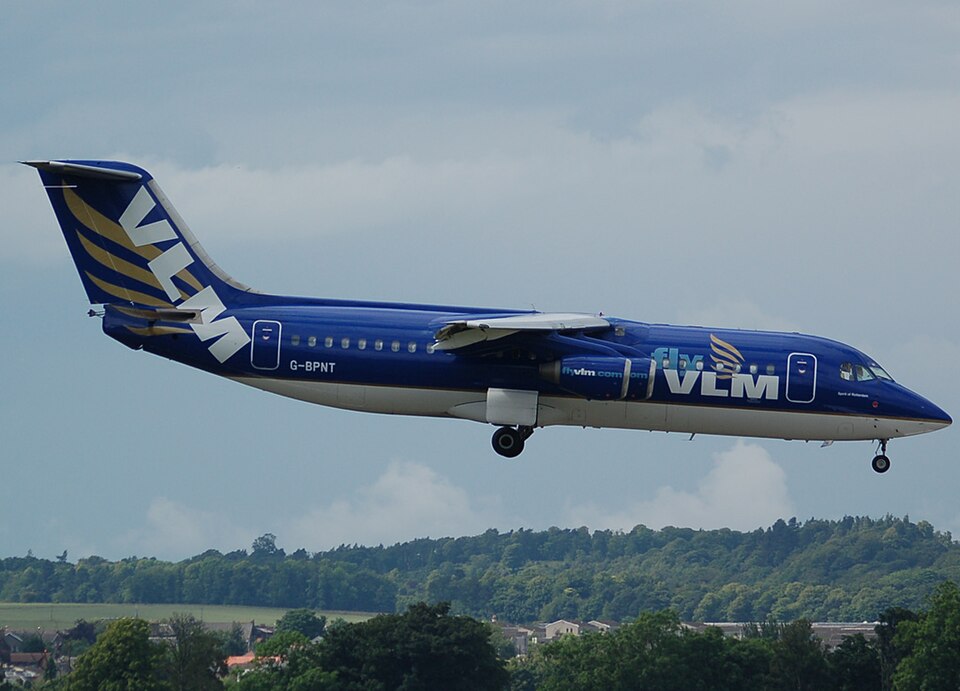
Occurrence
On 29 May 2004, at approximately 08:15 UTC, a BAe 146-300 registered G-BPNT, operating as Flightline flight 690P from London Southend Airport to Florence Airport, experienced a tail strike during a go-around. The aircraft had been cleared to land on runway 05, but initiated a go-around at 08:13:59. Instead of following the published missed approach procedure and the controller's instruction to turn right, the crew turned left. During the go-around, the aft fuselage contacted the runway, causing structural damage near the tail skid. The aircraft subsequently entered a circuit and landed normally at 08:31 UTC.
Aircraft and Crew
The aircraft was a BAe 146-300, serial number E3126, first registered on 13 April 1993. It was operated by Flightline Ltd. The flight crew consisted of a 51-year-old British captain with an ATPL, 7,475 total flight hours (5,645 on type), and a 32-year-old British copilot with an ATPL, 3,065 total hours (1,941 on type). Also on board were one maintenance technician and three cabin crew members. No injuries were reported. The aircraft sustained structural damage to the fuselage at the tail skid.
Meteorological Information
Weather reports indicated variable wind conditions. The METAR at 07:50 UTC reported wind from 060° at 8 knots, gusting to 19 knots. At 08:20 UTC, wind was from 030° at 13 knots. Runway wind readings showed variations in direction and speed. No wind shear advisories were issued.
Analysis and Probable Cause
Analysis of flight data recorder information showed that the approach was stable until about 100 feet above ground, where a sudden change in flight parameters occurred, consistent with wind shear. The crew initially attempted to correct but continued the approach; only when speed began to decrease rapidly did they increase power and pitch for a go-around. The resulting tail strike occurred with a nose-high attitude. The investigation concluded that a probable and sudden variability of wind direction and intensity (wind shear) below 100 feet reduced aircraft speed, only partially compensated by the crew. Contributing factors may have been an approach below the intended glide path and a late initiation of the go-around.
Post-Event Actions
The crew did not report the tail strike to air traffic control or airport authorities. The incident came to light when an ENAC official noticed the crew inspecting the fuselage on the parking apron. The cockpit voice recorder was overwritten and not useful.
No safety recommendations were issued, but the report emphasized the importance of timely reporting of anomalies.