Incident
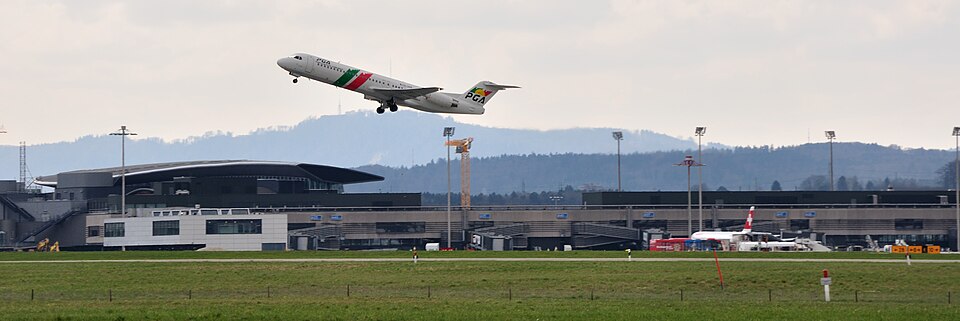
On 31 December 2008 at 21:00 UTC, a Fokker 100 (registration CS-TPE, MSN 11342) operated by Portugália Airlines on a regular passenger flight from Lisbon to Toulouse experienced a cabin altitude warning while cruising at flight level 340 near waypoint ZMR. The cabin altitude was observed at 10,000 feet and climbing at a rate of 1,000 feet per minute. The crew initiated the appropriate descent procedure and, due to the safety altitude in the area, maintained the aircraft at 14,000 feet. Air traffic control was informed, and coordination was requested for a return to Lisbon.
During the remainder of the flight, the cabin altitude continued to rise until it matched the aircraft's altitude of 14,000 feet. Thereafter, the cabin began to descend and stabilized at 3,500 feet. The aircraft landed without incident on runway 03 at Lisbon Airport and was handed over to Portugália's maintenance services for investigation of the depressurization cause.
Investigation
Maintenance examination of the pressurization system revealed the presence of a piece of speed tape that had detached from a temporary repair intended to protect passenger luggage from sharp edges on a cargo hold grille. The tape fragment was carried by the airflow into the area of the outflow valve, where it became lodged and interfered with the valve's operation.
Analysis indicated that the outflow valve modulates its opening and closing to maintain the manufacturer-defined pressure differential based on the aircraft's flight level. The obstruction prevented the valve from closing fully, preventing modulation under ideal conditions. At flight level 140, the lower pressure differential allowed the partially obstructed valve to achieve sufficient sealing to pressurize the cabin to 3,500 feet.
Probable Cause
The depressurization was caused by irregular functioning of the outflow valve due to intrusion of a speed tape waste in its seat, preventing its closure and consequent normal cabin pressurization.