History of the Flight
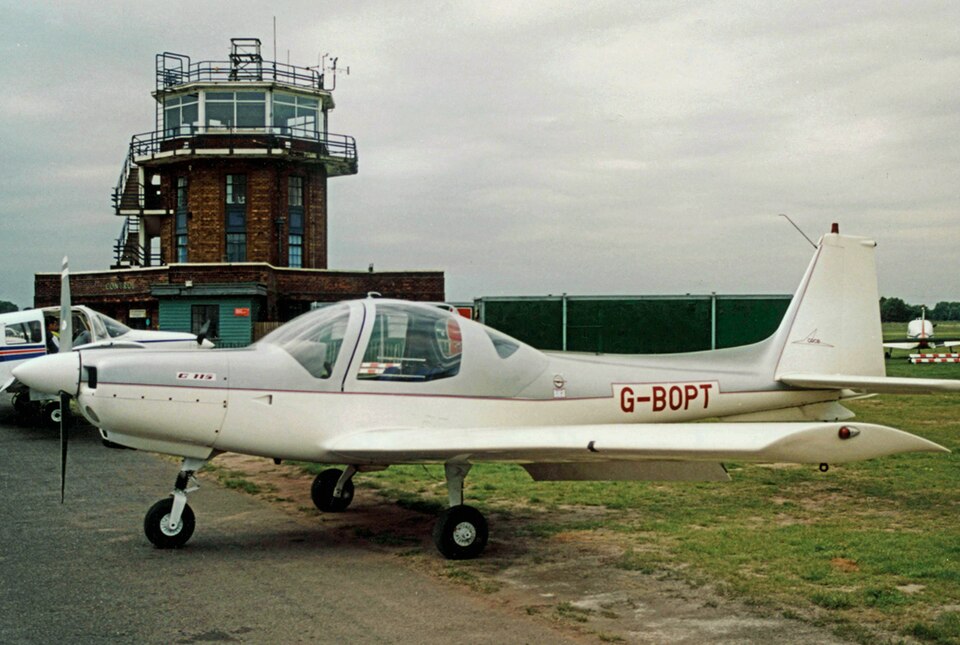
On 19 June 2005, a student pilot, flying solo in a Grob G115 (registration G-BOPT) at Barton Airfield, Manchester, was conducting circuits. The pilot had completed three circuits with an instructor earlier and then two solo circuits without issue. During the third solo circuit, while on downwind, the engine began to run roughly. The pilot completed downwind checks, including briefly selecting carburettor heat to hot, but returned it to cold when the engine continued to run roughly and seemed smoother on cold.
On base leg, the roughness worsened. Engine temperatures and pressures remained normal. The pilot reselected carburettor heat to hot and reduced throttle to idle for descent, causing further roughness. Attempts to adjust power settings failed to resolve the problem. Anticipating engine failure, the pilot set throttle idle, raised the nose to preserve altitude, and left flaps up until certain of reaching the airfield.
Turning finals, the pilot tried power again but roughness persisted. Confident of a glide approach, he reported to ATC and noted a high airspeed. He pitched up instinctively but then realized he was too high and likely to overshoot. Believing he had no option due to the engine problem, he selected full flap and at 300 ft set carb heat to cold. Crossing the threshold high, he looked for alternative landing sites but decided to continue. The instructor, watching from the tower, uttered "go round," overheard by ATC, who then instructed the pilot to go around. The pilot applied power but engine response was poor, so he returned throttle to idle.
The aircraft touched down at the far end of the runway, bounced, and landed again on rough ground beyond the runway. The pilot braked hard, and the aircraft came to rest on sloping ground near the airfield perimeter. The pilot was unhurt and exited without difficulty. Airfield emergency services arrived in just over two minutes.
Analysis
As of the report date, no fault has been found with the engine. The recorded temperature (26°C) and dew point (20°C) suggest conditions conducive to carburettor icing. The student had been using carburettor heat only briefly during each circuit, potentially allowing ice to form when set to cold and insufficient time to clear when set to hot. The student's description of roughness worsening upon selecting carb heat to hot may indicate induction system ice, as rough running clears only after sustained hot application. However, the chief instructor noted another aircraft of the same type reported no icing problems. The rough running could also have been caused by an unidentified issue.
Irrespective of the cause, the pilot became distracted troubleshooting the engine problem. His focus on preserving altitude to glide to the airfield led to a high and fast approach. Late flap selection and attempts to apply power when already high or fast compounded the situation. Alternative landing sites were limited by a dual carriageway beyond the runway and buildings or tall hedges on either side. Unable to go around and without another suitable landing option, the pilot was committed to landing on the airfield. He was fortunate that, despite touching down at the far end, the aircraft stopped short of the road.