Synopsis
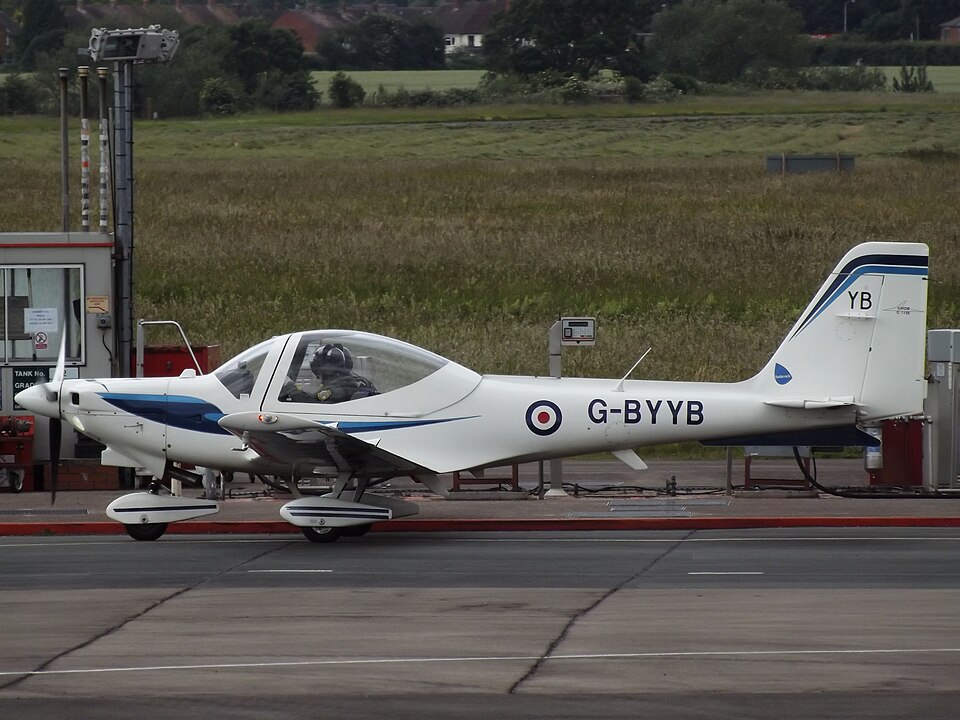
On 11 December 2007, a Grob G115E Tutor, registration G-BYYB, sustained a nose landing gear collapse during a training flight at RAF Cosford, Shropshire. The aircraft, powered by a single Lycoming AEIO-360-B1F engine and manufactured in 2001, was being flown by a 20-year-old student pilot on her first solo flight. The pilot had 15 hours of flying experience, all on type, with 1 hour in the last 90 days. No injuries were reported. Damage included a collapsed nose leg, broken propeller blades, shock-loading to the engine, and damage to the mounting frame and cowlings.
History of the Flight
The student pilot had just completed a 50-minute dual sortie in the circuit, assessed as of a 'high average' standard. She was briefed to carry out one normal circuit and landing while her instructor observed from the control tower with radio contact.
The first landing was firm, followed by a slight bounce, prompting the pilot to initiate a go-around. The second landing resulted in a significant bounce, and the instructor instructed the student to go around again and fly the circuit pattern to settle down, also allowing a broken spat (from earlier damage) to be recovered from the runway. The third landing was reported as firm and nosewheel first, causing damage to the nosewheel spat. On the fourth landing, which was long and slightly fast, the nose leg collapsed, and the aircraft came to rest on the grass to the left of the runway. The student pilot evacuated without difficulty and was taken to the medical centre.
The instructor was of the opinion that, flustered by the first two bad landings, the student had failed to round out on the third and damaged the nose landing gear structure, which collapsed on the fourth landing.