Incident Overview
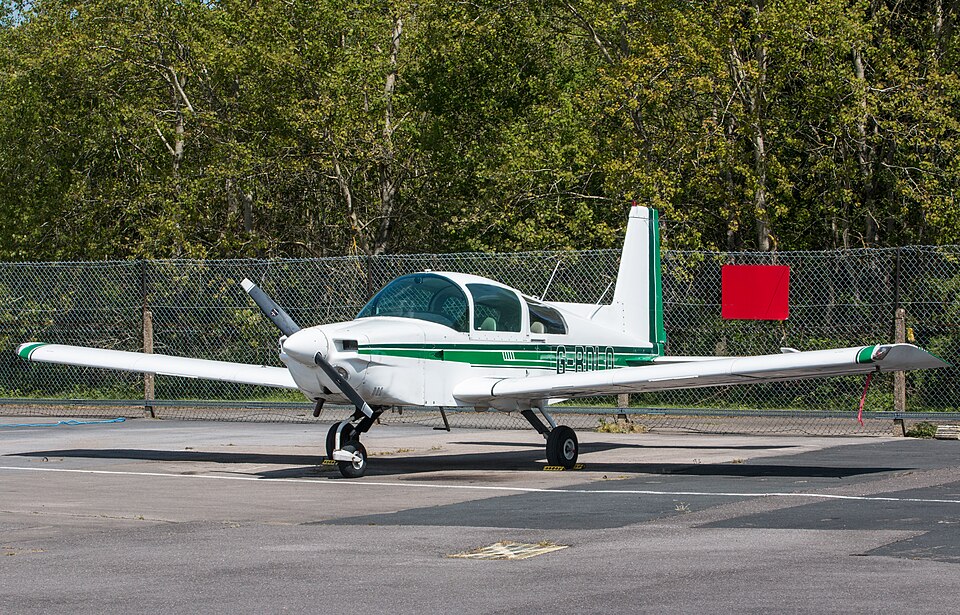
On 28 August 2000 at 1703 UTC, a Grumman AA-5A (registration G-BDLO) experienced a partial collapse of the nose landing gear leg while taxiing along a grass taxiway parallel to Runway 26 at Elstree Aerodrome, Hertfordshire. The aircraft had just completed a normal landing. The collapse resulted in damage to the propeller and the nosegear support structure.
Aircraft and Pilot Information
The aircraft was a 1975 Grumman AA-5A powered by a single Lycoming O-320-E2G piston engine. The private flight was operated by a 48-year-old pilot holding a Private Pilot's Licence, with a total flying experience of 1,100 hours, of which 300 were on type. The pilot had flown no hours in the previous 90 days.
Nose Landing Gear Failure Details
The nose landing gear leg on this aircraft type is a shaped cantilevered tube attached to a torsion tube mounted transversely in the fuselage. Maintenance personnel who inspected the aircraft after the incident reported that a failure had occurred in the region where these two tubes joined. They suspected that the failure could have resulted from corrosion-related fatigue cracking and requested that the damaged components be examined by the AAIB. However, before the parts could be forwarded, they were apparently inadvertently discarded during the repair of the aircraft.
Previous Occurrences
The source notes that this aircraft type has had a relatively high incidence of nose landing gear failures in service, including torque tube damage. These failures have usually occurred due to overstressing of the noseleg as a result of bounced or heavy landings on the nosewheel, although such overstressing did not occur in this incident.
Injuries and Damage
No injuries were reported to the sole occupant (the pilot). The damage was limited to the nosegear support structure and the propeller.