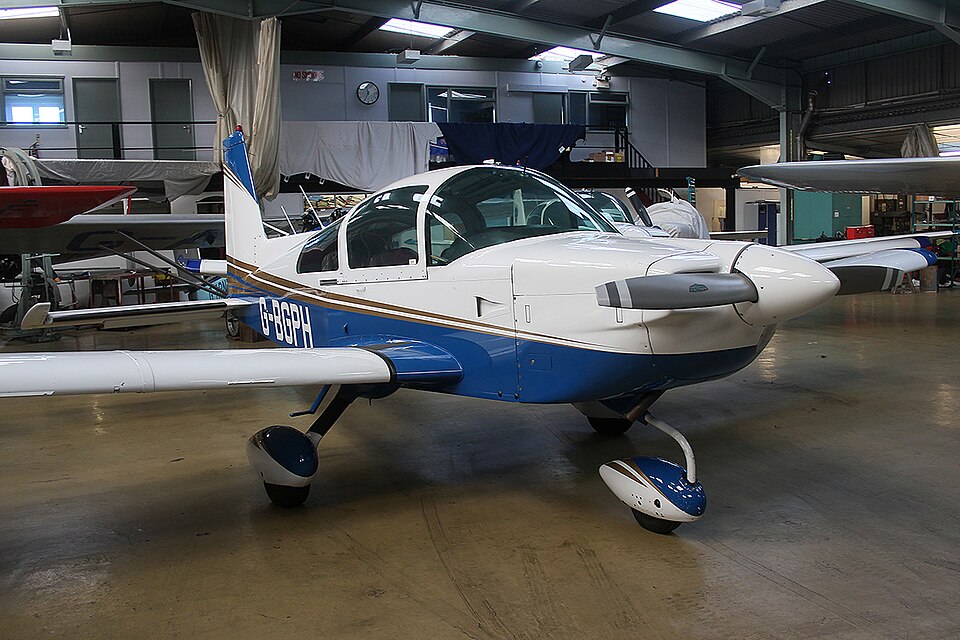
Aircraft and Flight Details
The aircraft involved was a Gulfstream AA-5B, registration G-BGPH, manufactured in 1979. It was powered by a single Lycoming O-360-A4K piston engine. The flight was a private familiarisation flight with a qualified instructor seated in the right-hand seat. The commander, aged 42, held a Private Pilot's Licence and had a total of 92 flying hours, of which only 2 were on type. His recent flying experience was limited: 6 hours in the last 90 days and 2 hours in the last 28 days.
The Incident
The flight departed from Biggin Hill and proceeded to Rochester Airport, Kent, to practice touch-and-go landings. The first circuit and landing were uneventful. During the second landing, the aircraft experienced a slight bounce and then touched down on all three wheels. Both the pilot and instructor considered that neither landing was sufficiently heavy to cause concern. The pilot applied power for a further circuit and landing. However, the aircraft failed to accelerate as expected, and the pilot closed the throttle. Shortly thereafter, the nose of the aircraft dipped, and the propeller struck the grass runway before the aircraft came to a halt on the edge of the runway.
Post-Accident Examination
Subsequent examination revealed that the nose landing gear had collapsed. Neither pilot believed the landing was heavy enough to cause damage, leading them to suspect a pre-existing weakness in the nose landing gear structure. The nose landing gear had been examined by X-ray approximately six months earlier during routine maintenance and was found to be serviceable. The engineer who examined the aircraft after the accident determined that the nose landing gear failure was consistent with an overload and found no evidence of pre-existing failure.