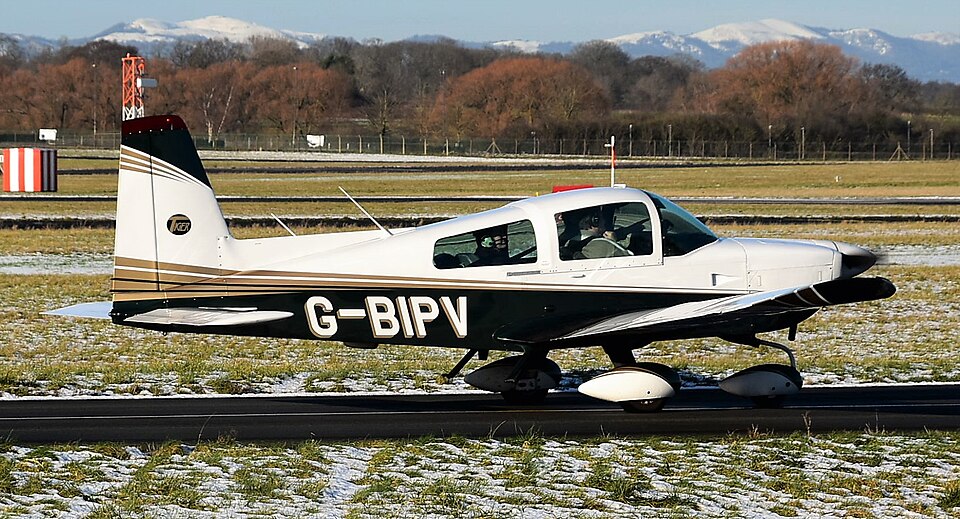
Aircraft and Pilot Information
The aircraft involved was a Gulfstream AA-5B, registration G-BIPV, manufactured in 1979. It was powered by a single Lycoming O-360-A4K piston engine. The pilot, aged 57, held a Private Pilot's Licence with an IMC Rating and had accumulated 681 total flying hours, including 4 hours on type. His flying experience in the previous 90 days was 8 hours, all within the last 28 days.
Flight Details
The private flight originated from Lydd Airfield with Bournemouth International Airport as its destination. The forecast meteorological conditions were CAVOK, with a surface wind of 240° at 10 knots. Runway 26 was in use, which has a published landing distance of 1,970 metres and a dry asphalt surface. The runway was equipped with approach and threshold lighting and Precision Approach Path Indicators (PAPIs) set to 3°.
Approach and Landing
After reaching a visual reporting point, the pilot was instructed to report on left base for Runway 26 and was informed that he was following a Puma helicopter. To increase spacing, the pilot performed one orbit. He positioned on final approach at 3 nautical miles and established a vertical profile with the PAPIs showing two red and two white lights, maintaining a stable airspeed. Noticing traffic behind on final, the pilot decided to land and exit at the intersection with Runway 17, which allowed a landing distance of 832 metres. Just prior to touchdown, he selected full flap but did not have time to correct the resulting trim change. The aircraft landed heavily on all three wheels.
Post-Landing Events
The duty air traffic controller observed the aircraft bounce back into the air before landing on the nosewheel. The propeller also made contact with the runway surface. The nosewheel collapsed, and the engine was shock loaded. The pilot was not injured.
Damage
The nature of damage to the aircraft included a collapsed nosewheel and an engine that experienced shock loading.