History of the Flight
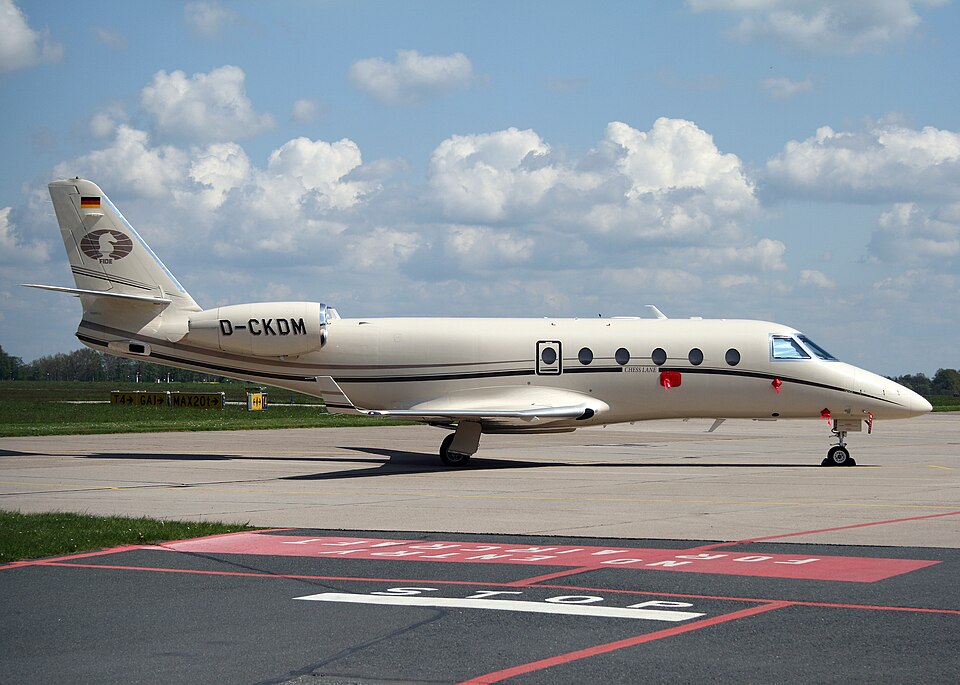
On 6 February 2011, a Gulfstream G150 (registration D-CKDM) was preparing for a commercial flight from Royal Air Force Northolt Airport to Moscow. The aircraft had been parked for three days following an inbound flight. The two pilots and three passengers boarded, and the commander, who was the pilot flying, completed pre-flight checks. After receiving taxi clearance, the aircraft taxied to Runway 25 via Taxiway B. The crew performed a static takeoff procedure, holding the brakes until full takeoff power was set, then releasing them.
The takeoff roll appeared normal until the commander called for rotation at Vr. Pulling the control column back produced no response; even when fully aft, the aircraft only pitched up to 1°. As speed approached V2 (129 kt), the commander exclaimed about the lack of rotation. The pilot not flying (PNF) retarded the thrust levers, and both pilots applied brakes. The commander steered with the tiller to the right side of the runway before turning left. The aircraft stopped at the end of the paved surface, oriented approximately 150° magnetic.
After stopping, the commander attempted to taxi clear but the aircraft would not move. Smoke was seen from the left mainwheels. The cabin attendant tried to open the door but could not; the commander did so and evacuated with the passengers. One passenger suffered a twisted ankle during disembarkation. A fire around the left mainwheels was suppressed by the Rescue and Fire Fighting Service.
Flight Data and Analysis
Flight data showed acceleration during the takeoff roll was below normal. The investigation found no technical fault with the aircraft. The most likely explanation was that the brakes were being applied during takeoff, probably due to inadvertent braking by the commander. This reduced acceleration and created a nose-down pitching moment that prevented rotation. However, partial brake operation from another cause could not be ruled out.
Aircraft and Brake System
The Gulfstream G150 is a small business jet with conventional mechanical elevator and rudder controls. Brakes are applied by pressing the top of the rudder pedals, which actuate power brake valves. The commander typically kept his heels off the floor during taxi and takeoff, using rudder pedals for steering and guarding the tiller. He noted occasionally applying brakes inadvertently during taxi. The PNF kept his feet flat on the floor.
Brake assemblies on both main gears seized after the incident. Left main gear tyres and brakes suffered fire damage; the left outboard tyre deflated due to a blown fuse plug. Right main gear tyres were in good condition. The aircraft had 780 flying hours and 371 cycles at the time.
Personnel and Conditions
The commander, aged 32, held an ATPL and had 1,750 total hours (490 on type). This was his first flight as commander after conversion training. The co-pilot had 2,950 hours (400 on type). Both pilots had not previously operated from Northolt. Weather conditions were not specified in the report.