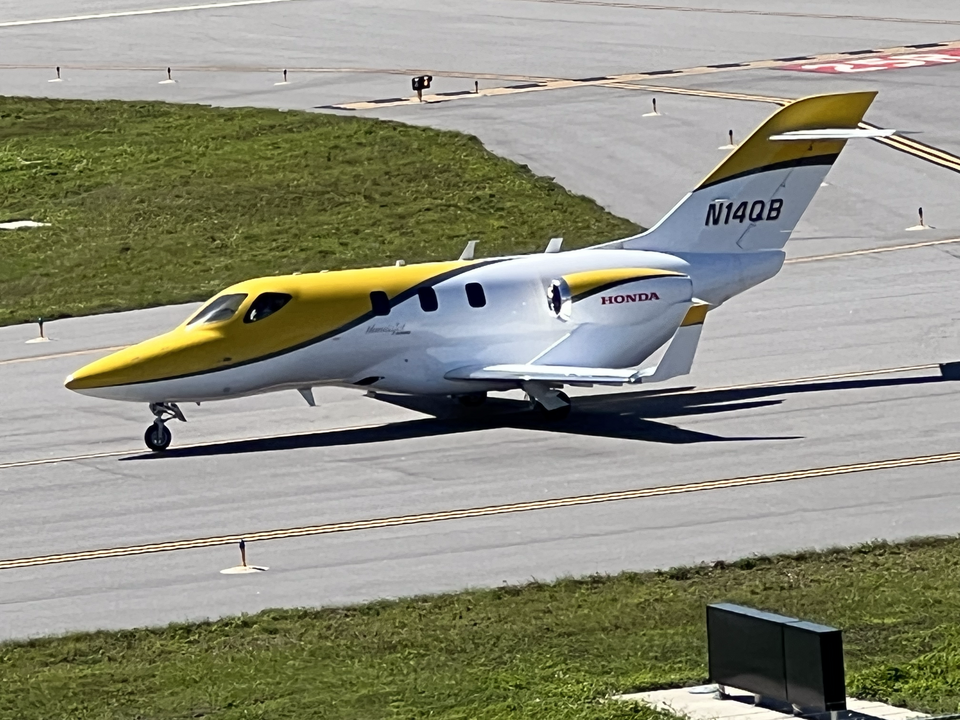
Accident Sequence
The pilot was landing at the destination airport in gusting crosswind conditions. After touchdown, the pilot applied aileron controls for the crosswind and applied the brakes, but observed no braking action. The airplane drifted left and departed the runway pavement, coming to rest upright in the grass infield adjacent to the runway. The outboard portion of the right wing separated, resulting in substantial damage.
Aircraft Performance
Data indicated that the airplane crossed the runway threshold at a speed 14 knots or more above the published landing reference speed. It touched down approximately 2,000 feet from the threshold. The left and right weight-on-wheels (WOW) parameters transitioned from air to ground consistent with initial touchdown; however, the left WOW parameter transitioned back to air about 2 seconds later, while the right WOW parameter remained on ground until the airplane departed the runway. A review of Central Maintenance Function (CMF) data files found no record of airplane system anomalies from lift-off to touchdown. Multiple system anomalies recorded after the excursion were consistent with airframe damage sustained during the accident sequence.
Brake System and Weight-on-Wheels
The brake system touchdown protection prevents brake application until wheel spin-up occurs to avoid landing with a locked wheel. After weight-on-wheels has been true for three seconds, power braking is enabled. The lack of positive weight-on-wheels parameters likely inhibited brake application due to the touchdown protection function, resulting in the pilot observing no braking action. The excess airspeed, extended touchdown, and transient weight-on-wheels parameters were consistent with the airplane floating during the landing flare and with aileron control application for crosswind conditions. The airplane was not equipped with wing-mounted speed brakes, which would have assisted in maintaining weight-on-wheels during the initial landing phase.
Wind Conditions
The most recent wind report, transmitted by the tower controller when the airplane was on a 3-mile final, indicated a 70° crosswind at 15 knots, gusting to 25 knots. The crosswind gust component was about 24 knots. The airplane flight manual specified a crosswind limitation of 20 knots for takeoff and landing; therefore, the crosswind at the time of the accident exceeded the airframe crosswind limitation and would have made control during touchdown difficult.
Pilot Actions and Regulatory Context
The pilot reported making two requests to the approach controller to land on a different runway, but those requests were denied. The investigation was unable to make any determination regarding a pilot request for an alternate runway. Federal Aviation Regulations state that the pilot in command is directly responsible for, and has final authority over, the operation of the aircraft, and that no person may operate a civil aircraft without complying with operating limitations. The pilot's ultimate acceptance of the runway assignment, which likely exceeded the crosswind limitation of the airplane, was contrary to regulations and to the safe operation of the airplane.