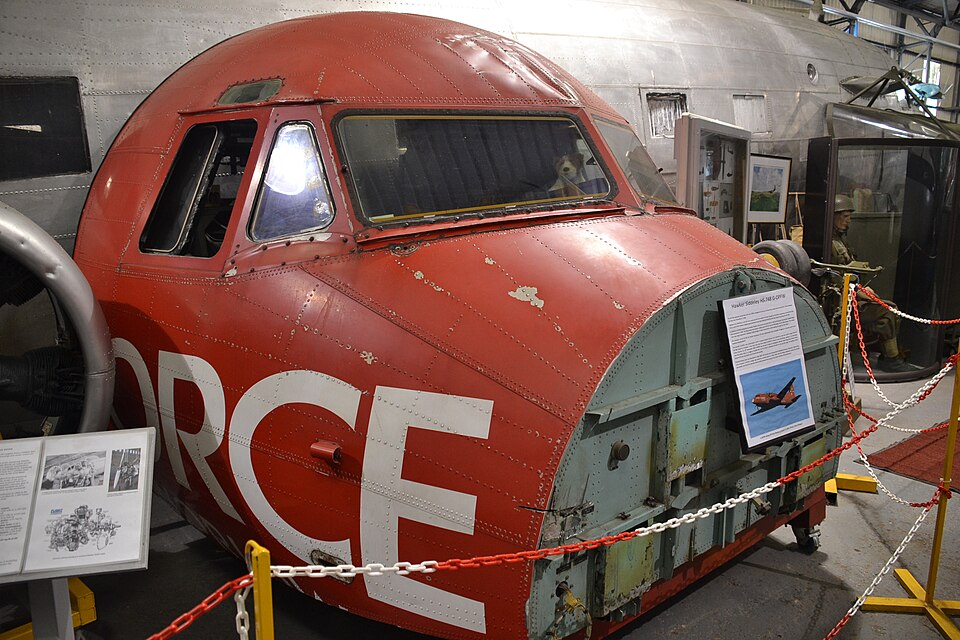
Incident Summary
On 14 November 2002 at 2350 UTC, a HS.748 Series 2A aircraft, registration G-OPFW, was operating a cargo flight from Pisa, Italy to Paris, France. The crew consisted of two pilots and one passenger. No injuries or damage were reported. The aircraft was equipped with two Rolls-Royce Dart 534-2 turboprop engines and had been manufactured in 1972.
Flight History
The crew had been on standby at Paris Charles de Gaulle (CDG) and were awakened at 1230 hrs to fly from Rome to Pisa and then to CDG. They departed Rome one hour late. During the turnaround at Pisa, the first officer noted that the minimum safe altitude (MSA) for a leg of the planned route was 15,900 feet, while the aircraft's operational ceiling was 15,000 feet. The crew decided to fly at FL160. The commander reported that a senior company pilot had flown the aircraft to FL180 and that the company was seeking approval to raise the ceiling. The CAA had no knowledge of such a request.
Icing Encounter
After takeoff with water methanol assistance, the aircraft climbed to FL160. Milan Control offered a reroute via the CANNE waypoint in the Swiss Alps, which the commander mistakenly thought was the Cannes/Tanneron VOR in southern France. Approaching Genoa VOR, the crew received a GPWS 'PULL UP' warning and initiated an immediate climb. At FL180, the first officer pressed the radio altimeter test button, cancelling the warning. The crew leveled off at FL180.
Shortly afterward, ice began forming on the windscreen and wings. All anti-icing and de-icing systems were activated and appeared to function correctly, but ice accumulation continued rapidly. Ice on the windscreen reached an estimated 4-5 inches thickness, leaving only a small clear area. Engine power was increased to maximum continuous, but airspeed decayed from 150 to 120 knots. The stick shaker activated, and the aircraft could not maintain level flight. A descent was requested but denied due to terrain. The aircraft descended at approximately 500 feet per minute with the stick shaker intermittent. ATC then vectored the aircraft northeast and cleared it to FL160, where clear air allowed ice to dissipate and airspeed to increase.
Later, while rerouting to the LUL VOR, the aircraft reentered cloud and ice again adhered to the airframe. The stick shaker activated at 160 knots. ATC cleared the aircraft to FL100; speed increased to 205 knots in the descent, and the stick shaker cancelled. The flight continued to CDG in clear air, landing with approach flap without incident.
Post-Landing Inspection
After landing, large ice lumps were found underneath the fuselage. The de-icing system appeared functional, but inspection revealed a missing repair patch on the right inner wing de-ice boot.
Meteorological Conditions
An aftercast from the Meteorological Office indicated a slow-moving frontal system over the northern Alps with cloud layers from 5,500 to 26,000 feet. The freezing level was at 7,500 feet, and the probability of icing was extremely high, especially near the front.
Flight Data Recorder
The flight data recorder (a Plessey 1584 DARU) was removed but initially yielded no data. The recording tape had adhered to the tape drive capstan, causing a jam. The last complete flight recorded was three days prior; no data from the incident flight was recovered. The tape issue was attributed to a batch problem.
Flight Planning and GPWS
The company did not use a computer-based flight planning system. Pilot navigation logs (PLOGs) were manually produced, but the crew lacked a PLOG for the Pisa-CDG route, receiving a faxed copy without cruising altitude information. The MSA values on the PLOG were off-route safe clearance altitudes. The company operations manual stated that the maximum altitude obtainable must not be lower than the calculated minimum safe altitude, but it was unclear whether this referred to off-route or en-route MSA. On the actual route, the off-route MSA reached 16,400 feet, while the airway base was FL125. In a single-engine scenario, the stabilising altitude would have been about 4,000 feet below the airway base.
Radar data from Milan ATC showed the GPWS warning occurred at FL160 over the Genoa VOR where the MSA was 8,600 feet, indicating a spurious warning caused by an unserviceable radio altimeter. The crew followed the company's mandatory emergency manoeuvre but did not declare an emergency.
Flight Time Limitations and Training
The company contacted the crew at 1230 hrs, nine hours after they had gone off duty. The operations manual required a minimum rest period of 12 hours (or 11 if accommodation provided, or 10 at commander's discretion). The commander reduced the rest period to 10 hours.
This was the first time the company had temporarily based crews in Europe for long-term operations. The Air Navigation Order required the commander to demonstrate adequate route knowledge within the relevant period.
Probable Cause
None stated.