History of the Flight
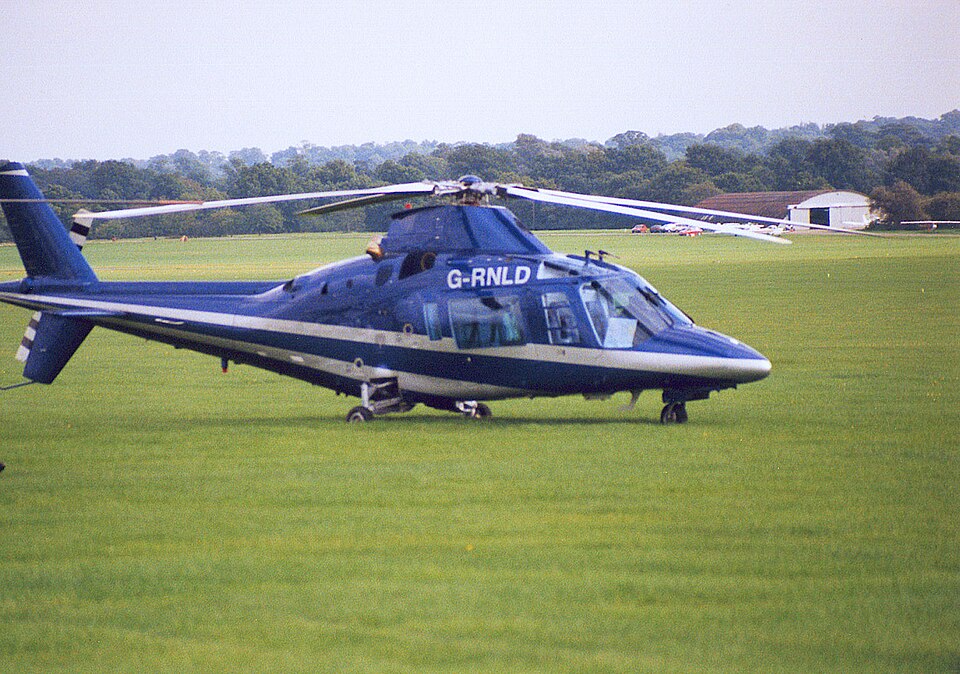
The aircraft took off from a private helipad in Kent. While passing north of Dartford at 1,500 feet, a sudden loss of engine power occurred without prior warning. The pilot established an autorotative descent and transmitted a 'MAYDAY' call. He did not recall hearing the 'Low Rotor RPM' warning; the rotor RPM stabilised at the correct autorotation speed. The rate of descent was approximately 2,000 feet per minute. The engine-off landing was heavy, resulting in serious injuries to both occupants. The aircraft remained upright with no fire. The impact splayed the landing skids, crushed the underside of the fuselage, and ruptured the fuel tanks. The engine, mounted at a 45-degree angle in the aft fuselage, had its bay doors and combustion casing crushed.
The Thames Radar controller heard the 'MAYDAY' call; the response to a request for souls on board was 'Standby'. No further calls were received. No transponder response was observed, but a primary radar return near Dartford was confirmed by the pilot before the emergency. Two light aircraft crews assisted in locating the helicopter, found at approximately 0935 hours. Police, fire, and ambulance services arrived quickly. A helicopter air ambulance arrived at 0950 hours; occupants were taken by road to a nearby hospital. The pilot reported his survival would have been unlikely without the prompt emergency response.
Examination
An insurance surveyor examined the aircraft on site and observed a broken air signal pipe (Part No 6870035), which conveys compressor outlet pressure (Pc) to the Fuel Control Unit (FCU). The pipe was photographed and supplied to the AAIB for metallurgical examination at DERA Farnborough. The pipe had fractured adjacent to the FCU, approximately 4 mm from the flared end, inside the 'B' nut's integral sleeve. Metallurgical examination showed the circumferential fracture was almost entirely fatigue. A single origin on the outer surface, at about 45 degrees to the bending plane, led to crack development. Fretting damage and corrosion pits were found near the origin. The DERA metallurgist considered pitting from anaerobic (crevice) corrosion more likely than fretting as the initiator. The material was consistent with AISI 321 stainless steel, which is not resistant to crevice corrosion. The engine manufacturer disagreed, identifying fretting due to misalignment as the predominant feature.
Maintenance
The company that performed most maintenance reported recurrent low engine power. Leaks in anti-ice or bleed air systems were rectified, but power only recovered to minimum specified. The air signal pipe had been disturbed six times since July 1997. In October 1999, the FCU was modified per CEB A-1329 and FAA AD 98-24-28. After modification, the engine experienced stagnation during starting, leading to extensive investigations including pipework leak checks and FCU replacement. Problems were resolved after the final FCU change, although some start hesitation remained.
When the broken pipe was first seen, its end was out of alignment with the 'B' nut by about half a pipe diameter (approx 3 mm). Only light pressure realigned it, and given impact severity, this was not considered evidence of misalignment during the last installation. Fretting inside the sleeve indicated contact from misalignment or vibration. The anti-vibration 'P' clip was properly installed. Possible external vibration sources included high-frequency vibration reported through rudder pedals days before the accident. Tail rotor balance was measured at 0.15 ips and improved to 0.1 ips; a small play in a tail rotor pitch link was found. Other pilots noted vibration remained above normal. The starter generator was examined; its bearing outer races had skidded, and a steel sleeve in the alloy end-plate was loose. Effects on operation were undetermined, but no unusual vibration was detected under electrical load.