Event
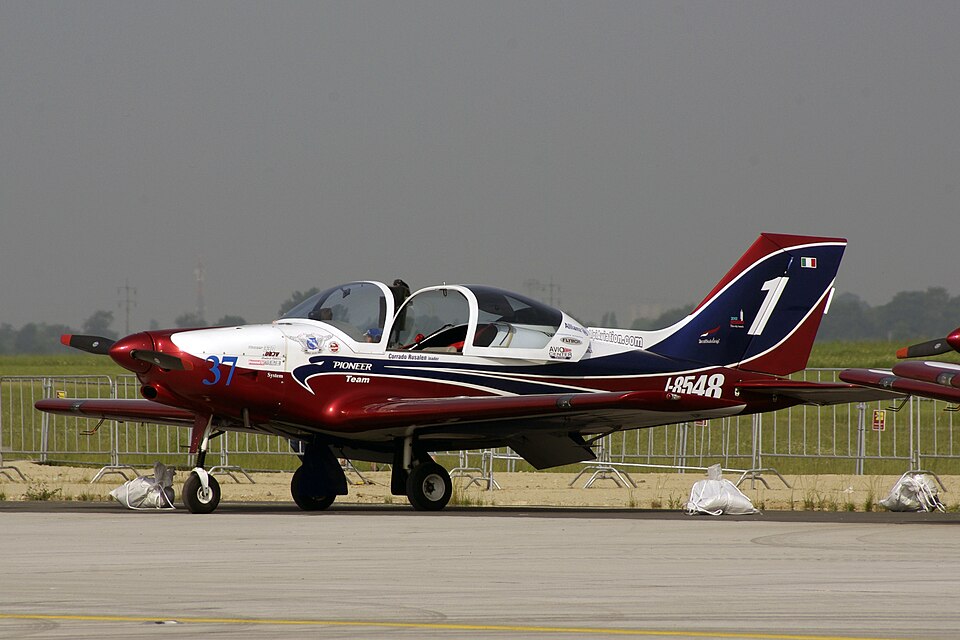
On 29 April 2023, at approximately 16:01 UTC, a Pioneer 300 ultralight aircraft, registration I-8548, crashed in mountainous terrain at coordinates 46°19'13" N 013°14'60" E, in the locality of Frazione Musi, Lusevera, province of Udine, Italy. The flight was recreational, the second of the day for the pilot and the third for the aircraft. A passenger was on board. The accident resulted in the destruction of the aircraft by fire and the death of both occupants due to rapidly developing thermal shock from the combustion. Toxicological tests were negative for both individuals. Vegetation was also burned.
Aircraft Information
The Pioneer 300 is an ultralight aircraft manufactured by Alpi Aviation. It has a low wing structure with a retractable tricycle landing gear, a wooden frame with composite paneling, and acrobatic maneuvers are prohibited. The specific aircraft, I-8548 (registration date 19 December 2006), was equipped with a Rotax 912ULS 100 hp engine, a DYNON D-100 EFIS, an AVMap EPK IV GPS, and a Flybox Propeller Regulator PR1-P for variable pitch propeller control. The propeller regulator could operate in automatic (constant speed) or manual mode, with manual mode intended only for ground testing or emergency. The aircraft had a maximum take-off mass of 600 kg. A ballistic parachute system was installed in January 2017; its expiry date was December 2022. The manual specified that for proper deployment, the engine should be shut off, and deployment times ranged from 0.6 to 1.2 seconds, with additional time for stabilization.
The aircraft logbook indicated the last periodic 200-hour inspection was on 4 October 2021; the next scheduled inspection was at 300 hours. At the end of the previous flight, the aircraft had 276.33 flight hours. The engine, serial number 9574674, was installed new on 5 March 2021; carburetor springs were replaced on 4 October 2021 per SB-912-075UL, and the last 100-hour maintenance was on 4 October 2021. The identification certificate listed maintenance expiry as 29 April 2024, based on the last reported maintenance to AeCI on 30 April 2021.
Pilot Information
The pilot, aged 34, held extensive military flying experience totaling 1688.30 hours as of December 2021, with qualifications on multiple military aircraft types. Details of VDS (ultralight) flying hours could not be fully reconstructed, but evidence showed: he completed a VDS indoctrination course on 1 January 2016, a VDS qualification flight on 3 January 2016 (on a Tecnam P92 ECHO), and obtained an advanced VDS pilot certificate on 25 February 2016 (valid to 24 February 2018). He obtained a formation flight rating on 12 February 2018, renewed his advanced pilot qualification on 4 March 2020, and received an advanced instructor qualification on 9 February 2021. His recency on I-8548, based on flights from Udine Campoformido (LIPD) recorded in the logbook from February 2022, was: last 7 days: 55 minutes; last 30 days: 55 minutes; last 90 days: 1 hour 30 minutes; last 6 months: 1 hour 30 minutes; last year: 5 hours 20 minutes; total from February 2022: 6 hours 32 minutes. On the day of the accident, he had flown a previous flight from 14:15 to 15:10 UTC. His medical certificate was valid at the time of the accident.
Weather Information
METAR reports from Rivolto Airport (about 43 km away) at 15:55, 16:55, and 17:55 UTC showed CAVOK conditions with good visibility and no significant phenomena. The area is known as the rainiest in Italy due to microclimatic conditions, but on the day conditions were good. A pilot who flew in the morning reported turbulence near the accident area at altitudes above the mountain crests. A video taken shortly after the accident showed the smoke column slightly inclined, indicating light wind from the east, with no gusts.
Investigation
The Italian National Flight Safety Agency (ANSV) conducted the safety investigation in accordance with EU Regulation 996/2010 and ICAO Annex 13. The investigation aimed to determine causes and contributing factors to prevent future occurrences. No probable cause is stated in the report.