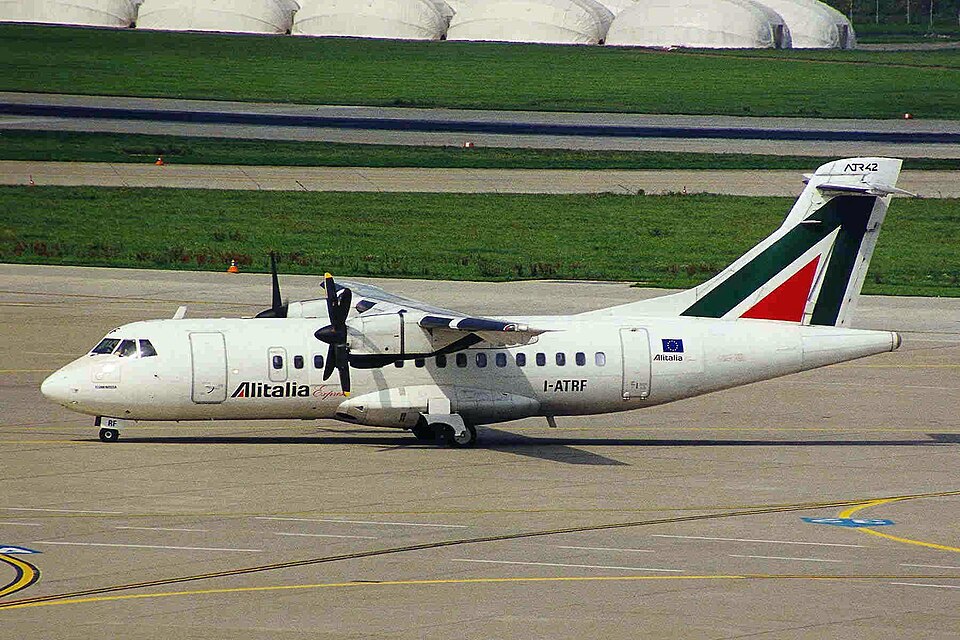
Event Details
On 6 March 2003 at 18:50 UTC, an ATR 42-300, registration I-ATRF, operating as Minerva Airlines flight N4 403 from Rome to Rimini, suffered a landing gear component failure during takeoff from Rome Fiumicino Airport (runway 25). The aircraft was being operated by Air Industria under a short-notice lease arrangement involving Italy First and Minerva Airlines, with the flight codeshared between Alitalia and Minerva.
Sequence of Events
The aircraft had arrived at Fiumicino at 16:00 UTC from Rimini and completed two additional flights that day without any reported anomalies, accumulating over three flight hours. After boarding 42 passengers, the crew received taxi clearance from stand E3 to runway 25 intersection BB. Following a brief hold and completion of the before-takeoff checklist, the aircraft was cleared for line-up and immediate takeoff.
As the crew advanced the throttles with brakes applied, at approximately 80% torque a loud bang was heard, accompanied by a sudden left yaw. The takeoff was immediately aborted and the parking brake set. The aircraft became immovable due to failure of a component in the left main landing gear assembly. No fire risk was present, and passengers were deplaned normally and rebooked on other flights to Rimini.
Aircraft Information
The aircraft was an ATR 42-300, registration I-ATRF. It was owned by Air Industria and operated on behalf of Minerva Airlines. The flight crew consisted of a commander and a first officer; their experience and qualifications were documented in the report. No information on injuries or damage to other property was provided.
Investigation
The Italian National Flight Safety Agency (ANSV) conducted the investigation, with a representative from the French BEA accredited as per Annex 13. The aircraft's flight data recorder and cockpit voice recorder were examined. The wreckage examination revealed that the swinging lever of the left main landing gear had fractured. Metallurgical analysis identified fatigue cracks that propagated through the component, leading to its eventual failure. Maintenance records indicated that inspections had not detected these cracks, and the inspection procedures were found to be inadequate.
Cause and Contributing Factors
The investigation determined the direct cause of the incident to be the fatigue failure of the left main landing gear swinging lever. A contributing factor was the inadequacy of maintenance and inspection procedures, which failed to identify the cracks before they led to failure.
Conclusion
The incident resulted from a mechanical failure that was not detected by existing maintenance practices. No injuries occurred, and the aircraft was substantially damaged. The ANSV issued safety recommendations aimed at improving inspection techniques for landing gear components.