Background
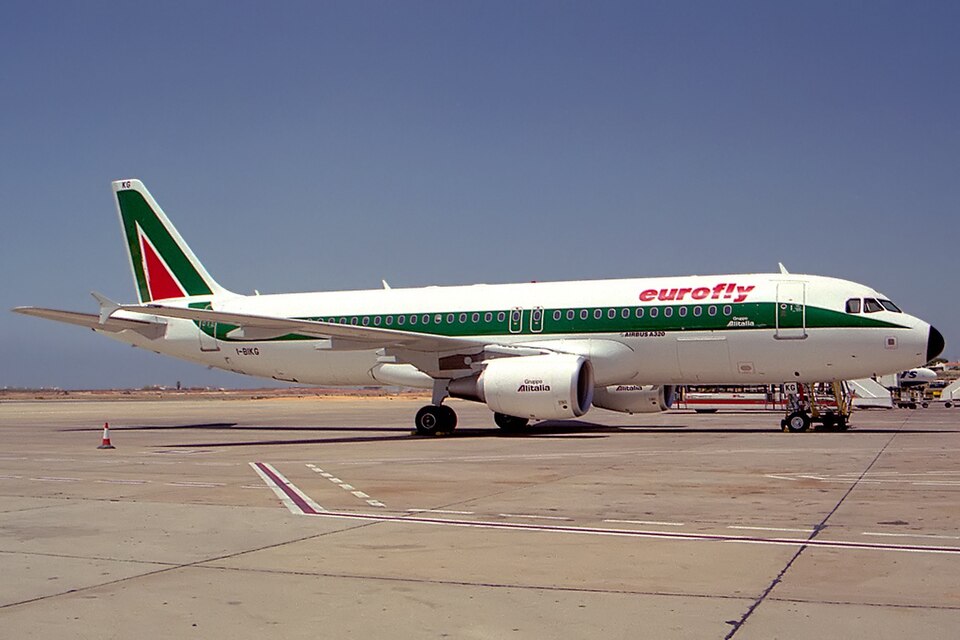
On 6 August 2002, an Airbus A320, registration I-BIKG, operated by Eurofly as charter flight 9050, was preparing for departure from Treviso S.Angelo Airport. The aircraft carried 159 passengers and 6 crew members, with a destination of Fuerteventura via a technical stop at Malaga.
Flight History
During the taxi phase prior to takeoff, the aircraft backtracked on runway 07/25 in a westerly direction to reach the start of runway 07. The commander reported that due to the aircraft weight being close to the maximum takeoff weight under the prevailing conditions and the wet runway surface, he intended to use the full length of the runway. To position the aircraft as close as possible to the beginning of runway 07, the commander manually turned the aircraft beyond the threshold of runway 07, encroaching onto the entire extension of the runway. It is presumed that during this maneuver, a portion of the asphalt pavement cracked under the main landing gear wheels.
When engine power was applied to initiate the takeoff roll, a section of asphalt measuring approximately 10 by 10 meters lifted from the pavement and fragmented. Pieces of asphalt were thrown into the air; a slab about 4 by 4 meters struck the left horizontal stabilizer of the aircraft, causing considerable damage.
Damage
The left stabilizer sustained significant damage from the impact of the asphalt slab. The aircraft was not otherwise reported to have structural failure. No injuries to occupants were mentioned in the report.
Aftermath
The commander aborted the takeoff upon sensing the impact on the aircraft structure. After requesting the necessary clearance, the aircraft returned to the parking area. The airport remained closed to air traffic until 18:20 UTC (20:20 local time) on the same day. The Italian National Flight Safety Agency (ANSV) classified the event as a serious incident and initiated an investigation.