Flight Information
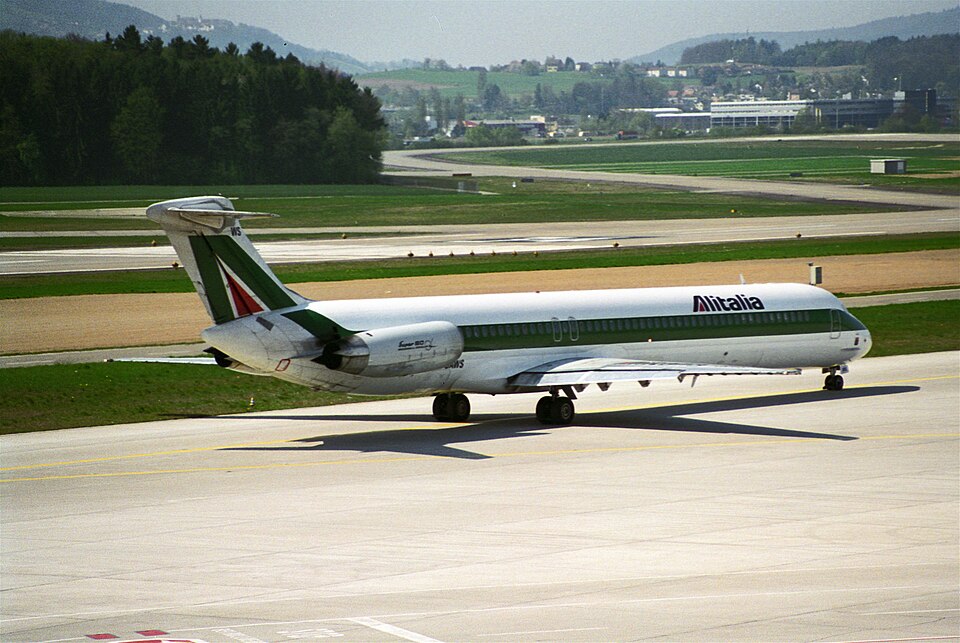
On 24 November 2001, at 13:08 UTC, an MD-82 aircraft, registration I-DAWE, operating a scheduled flight from Tirana to Rome under callsign AZA 507, landed on runway 16L at Rome Fiumicino Airport. Runway 16L was closed to traffic due to ongoing work, as notified by NOTAM. The crew had been authorized to land on runway 16C.
Approach
During the cruise phase, the captain, who was the Pilot Flying (PF), briefed the approach and assigned roles: the captain would manually fly the approach, and the copilot, as Pilot Not Flying (PNF), would cross-check operations. The approach involved overflying the Teano (TEA) and Ciampino (CIA) beacons, followed by radar vectors. At approximately nine nautical miles north of the airport, the aircraft was directed to turn and descend. The crew received clearance to intercept the ILS for runway 16C. The captain disengaged the autopilot after sighting the airport and continued manual flight.
Landing
At about seven miles from the runway threshold, approach control instructed the crew to contact the tower on 119.3 MHz. The copilot contacted the tower and received landing clearance for runway 16C, which he correctly acknowledged. After touchdown, both pilots realized that they had landed on runway 16L instead of the intended 16C.
Post-Landing Communications
The tower controller, observing the ASMI (Airport Surface Movement Indicator) radar display, noticed that the aircraft had landed on the closed runway 16L. The controller then informed the crew that they had landed on the wrong runway and instructed them to stop the aircraft at its current position.