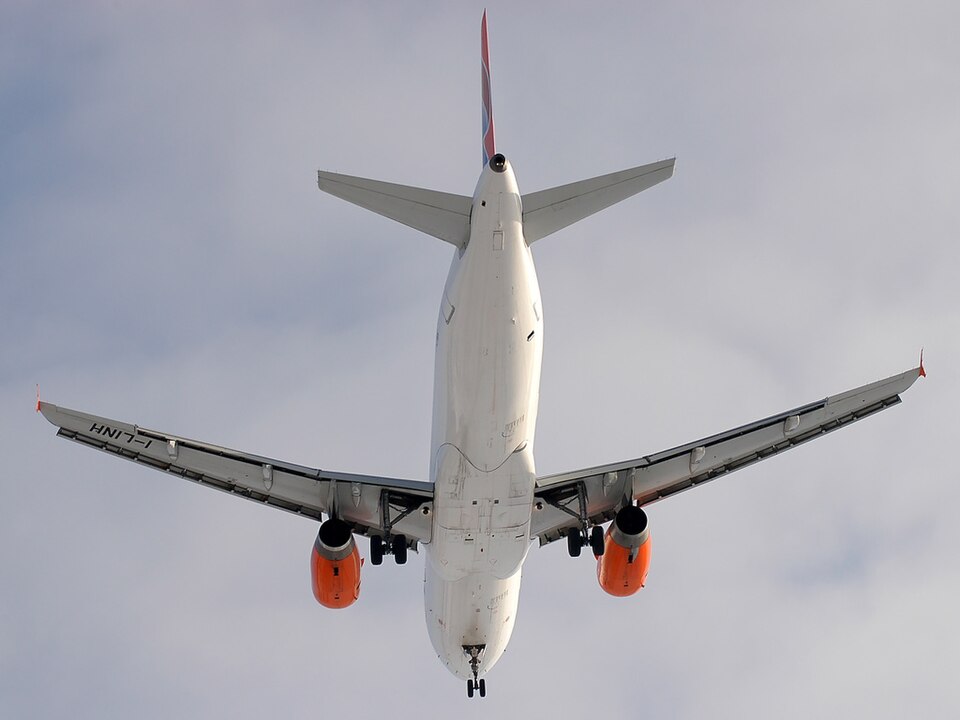
Event Overview
On 20 November 2009, at approximately 08:42 UTC (09:42 local), a serious incident occurred about 10.5 nautical miles southeast of Verona Villafranca Airport involving an Airbus A320, registration I-LINH, operated by WindJet SpA, and two Italian Air Force Tornado aircraft flying with the callsign Lince 01. The A320 was executing a TCAS Resolution Advisory (RA) 'Descend' after crossing paths with the military aircraft. No injuries or damage were reported.
Aircraft and Operators
The A320, registration I-LINH, was conducting a scheduled passenger flight (JET52G) from Verona Villafranca to Catania Fontanarossa, with 6 crew members and 104 passengers on board. The two Tornado aircraft, operated by the Italian Air Force, were on an operational flight under VFR-OAT (Visual Flight Rules - Operational Air Traffic) with the callsign Lince 01.
Sequence of Events
The A320 departed Verona Villafranca at 08:39 UTC on the FER6S standard instrument departure (SID), initially cleared to climb to FL110. At 08:41, the flight contacted Garda APP/Radar (military approach control) while climbing through 5000 feet and was further cleared to FL150. The controller provided traffic information about two Tornado aircraft at 8 nautical miles, in the 1 o'clock position, moving right to left eastbound, but with no vertical information.
The Tornado formation had departed Ghedi at 08:30 UTC on a VFR flight plan. Due to ground visibility below 5 km, they received a special VFR clearance. After completing a five-minute training activity in area LIR-103 between FL95 and FL105, at 08:36 they reported leaving Casalmaggiore at FL105 and proceeding eastbound via Borgoforte and Legnago, still at FL105.
At 08:41:40, Garda APP/Radar updated the A320's crew with traffic information at 4 nautical miles, still without vertical position. The A320 crew reported the traffic in sight. At 08:42, the controller informed Lince 01 that the A320 was at FL80 and in sight. Immediately afterward, at approximately 08:42:30, the A320 crew reported executing a TCAS RA 'Descend'.
Air Traffic Control and Airspace
The incident occurred within the Garda Control Zone (CTR), which was under the jurisdiction of the Garda APP/Radar military unit. At the time, the airspace was classified as 'D' from the surface up to FL195 in the area of the event. In Class D airspace, air traffic control provides separation between IFR flights but only traffic information between IFR and VFR flights. The controller was qualified and no training was in progress.
Communications and TCAS
Communications between Garda APP/Radar, the A320, and the Tornado were recorded. The controller provided successive traffic updates to both aircraft, but the A320 received no vertical information until after the TCAS RA. The A320's TCAS system generated a Resolution Advisory that required a descent to avoid the conflicting traffic. The flight crew complied with the RA.
The investigation noted that the A320's departure clearance was issued without traffic information regarding the Tornado, and that the clearance did not guarantee separation from other authorized traffic. However, the specific probable cause was not determined.