Incident Overview
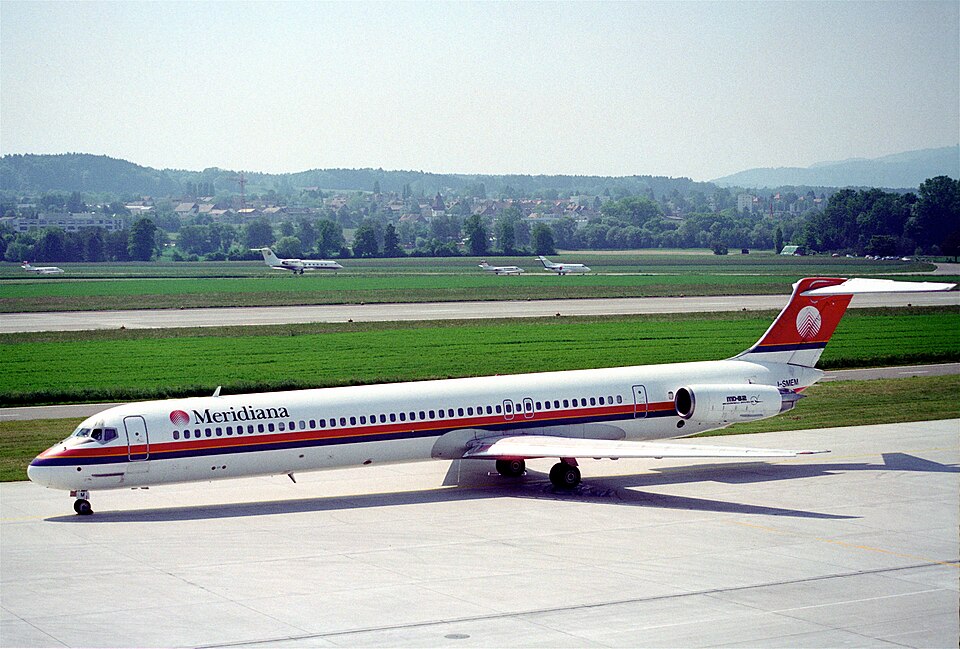
On October 7, 2003, at 11:55 UTC, a McDonnell Douglas MD-82 with registration I-SMEM, operated by Meridiana S.p.A., was involved in a ground collision at Pisa Airport (LIRP). The aircraft, which had just landed on a scheduled flight carrying 128 passengers and six crew members, was taxiing through "gate 2" toward its assigned parking spot. During this maneuver, the left wingtip of the aircraft struck a stationary Fiat-Iveco truck parked near the intersection of the perimeter road and gate 2.
Damage and Casualties
The collision resulted in no injuries to any persons on board or on the ground. However, significant damage was sustained by both vehicles. The MD-82 suffered damage to the extremity of its left wing, while the truck's driver's cabin was severely damaged. Despite the impact, the aircraft continued its taxiing maneuver autonomously to the parking area.
Contributing Factors
The investigation identified several factors contributing to the incident. The truck driver had stopped in an incorrect position, failing to adhere to the horizontal and vertical signage that required vehicles to stop 75 meters before the intersection. Additionally, the pilot-in-command did not adequately assess the separation between the aircraft and the stationary truck, despite a NOTAM warning of personnel and equipment on the apron. The co-pilot also failed to assist in monitoring obstacles, prioritizing post-landing checklist tasks instead.