History of the Flight
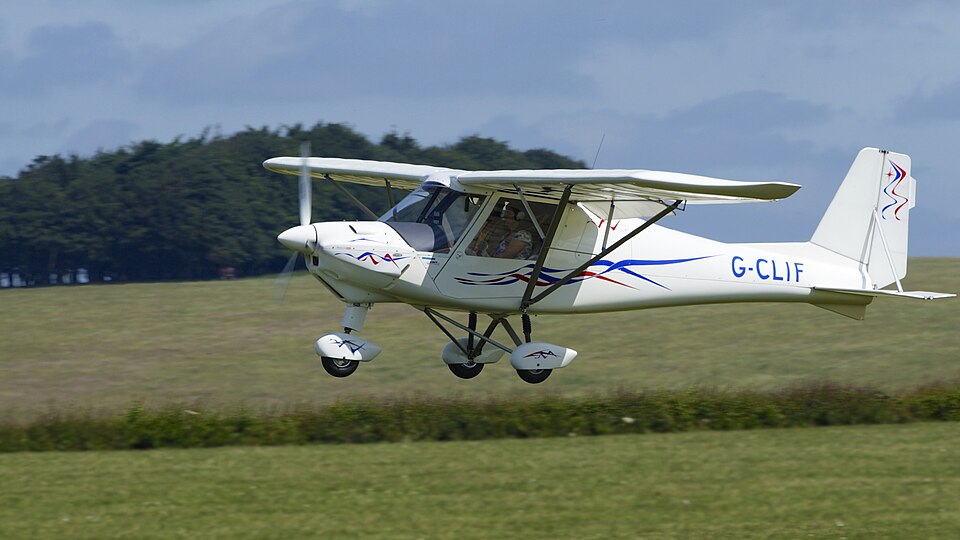
On 6 June 2008, at approximately 1500 UTC, a private Ikarus C42 FB UK microlight, registration G-CLIF, operated by a single pilot with one passenger, was conducting a landing at Newton Pevril Airfield, Dorset. The pilot, aged 54 and holding a Private Pilot's Licence with 1,408 hours total flying experience (300 hours on type), joined on base leg to land on the easterly runway, believing the wind was across the runway. However, during the landing, it became evident that there was a tailwind. After touching down briefly about one third of the way along the runway, the pilot realized there was insufficient distance to stop and initiated a go-around.
During the go-around, the pilot found that, with the combination of a tailwind and full flap, he could not clear a row of cables crossing the far end of the runway. He managed to avoid the cables by turning to the right but, in doing so, the propeller struck the top of a row of trees bounding the southern edge of the field, at a height of between 20 ft and 30 ft. Despite suffering damage to the propeller, the aircraft continued to climb marginally, and the pilot carried out an elective landing in the field beyond the tree line.
Aircraft Damage
The aircraft sustained damage to the right landing gear and fuselage, and the propeller was broken. The pilot and passenger reported no injuries.
Reported Cause
The pilot commented that although the presence of the cables made approaches to Newton Pevril inherently difficult, he had landed there many times previously without problems. He attributed the accident to a too relaxed attitude on his part, and a dropping of his guard, as a result of which he misread the wind potential and wrongly landed downwind.