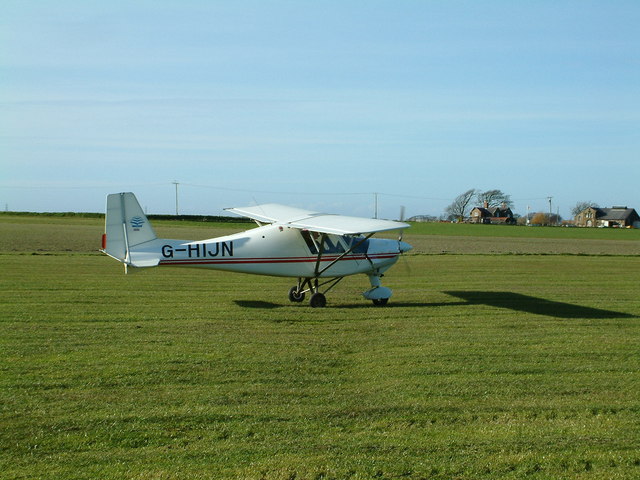
Incident Overview
On 9 April 2010, at approximately 1000 UTC, an Ikarus C42 FB100 (registration G-HIJN) experienced a failure of its left main landing gear while conducting a training flight near Ince Blundell. The aircraft was being used for circuit training when ground personnel observed that the left main landing gear structure appeared to have failed. The instructor was informed of the issue and performed a low pass to allow confirmation. Upon receiving confirmation, the instructor declared a PAN and diverted to RAF Woodvale, Merseyside, where a successful landing was carried out.
Aircraft and Crew Information
The aircraft, manufactured in 2004, was powered by a single Rotax 912 ULS piston engine. The commander held a Private Pilot's Licence and was 38 years old. He had accumulated 4,538 total flying hours, including 476 hours on the type. His recent flying experience included 126 hours in the last 90 days and 38 hours in the last 28 days. There were two crew members on board and no passengers; no injuries were sustained.
Damage and Examination
The left main landing gear had failed. Subsequent examination revealed that the axle had failed due to a previously unidentified crack that had propagated in fatigue. The aircraft was used primarily for training from grass runways. The owner believed that this operating environment contributed to the crack formation and growth.
Outcome
The aircraft sustained damage to the left main landing gear, but the pilot executed a controlled landing at RAF Woodvale without further incident. No injuries occurred.