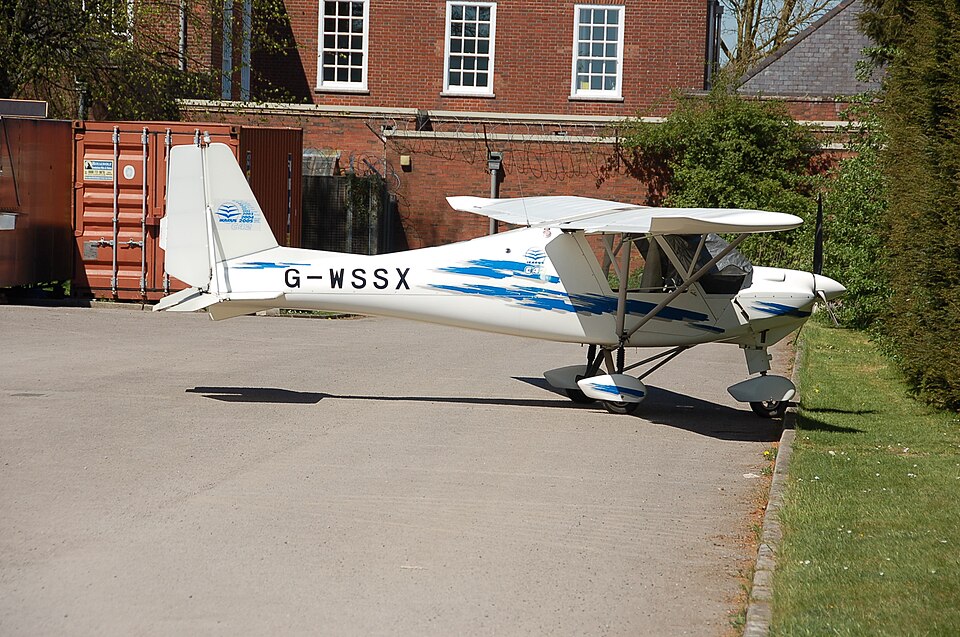
Aircraft and Flight Details
The aircraft involved was an Ikarus C42 FB100, registration G-WSSX, powered by a single Rotax 912 ULS piston engine. It was manufactured in 2006. The flight was a training solo circuit at Old Sarum Airfield, Wiltshire, on 15 March 2007 at 1445 UTC. The sole occupant was a student pilot aged 68, with a total flying experience of 50 hours, all on type. In the previous 90 days, he had flown 10 hours, with 5 hours in the last 28 days.
Sequence of Events
Prior to the accident flight, the student pilot had completed several dual circuits from Runway 24. His instructor then cleared him for his first solo circuit from the same runway. During the landing after this circuit, the student flared a little too high, causing the airspeed to decay. Subsequently, the nose dropped, and the aircraft landed heavily on its nose wheel.
Damage
The impact caused the nose landing gear to collapse. The propeller struck the ground, resulting in damage to the propeller and shock-loading of the engine. The pilot reported no injuries.
Probable Cause
The student pilot flared too high, leading to a loss of airspeed and a heavy landing on the nose wheel, which caused the nose landing gear to collapse and the propeller to strike the ground.