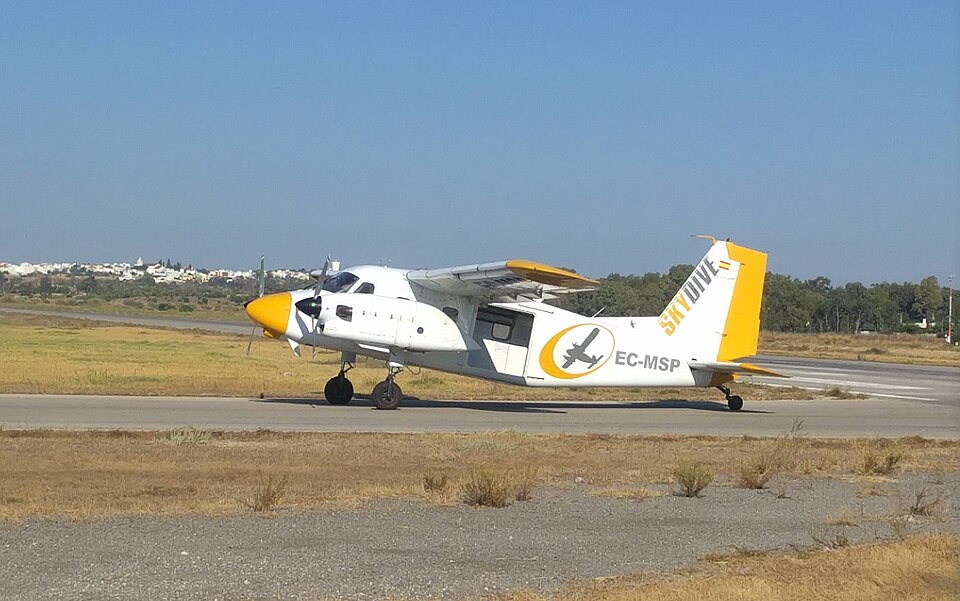
Incident Overview
On 30 January 2025, at approximately 09:56 local time, a Dornier DO28-G92 aircraft, registration EC-MSP, experienced an incident at La Juliana Aerodrome (Seville). The aircraft had departed from runway 27 at around 09:40 with a pilot and a passenger on board for a preparatory flight before a skydiving operation. The passenger was a more experienced pilot and instructor on the aircraft type.
Sequence of Events
According to occupant testimony, the flight proceeded normally through all phases, including landing. During the landing run on runway 27, after taxiing approximately 400 meters, the aircraft began to decelerate. At that point, the aircraft veered slightly to the right. While the pilot corrected to realign the aircraft with the runway centerline, the tail lifted and the nose pitched forward. This caused the nose and one blade from each propeller to strike the tarmac. The pilot immediately shut down the engines, disconnected the master switch, and cut off the fuel supply. Both occupants exited the aircraft unassisted through the front doors and sustained no injuries.
Aircraft and Crew Information
The pilot, aged 42, held a Commercial Pilot Licence issued by the Spanish Aviation Safety Agency, with ratings including DO28-G92/SP, and had accumulated 2,363 hours of flight time, of which 14.4 hours were on the incident aircraft type. The passenger, aged 43, also held a Commercial Pilot Licence with 6,450 total flight hours, including 4,000 hours on the type. The aircraft was a twin-engine, tail-skid Dornier DO28-G92, serial number 4331, manufactured in 1978. It was powered by two GE H75-200 turboprop engines and had a maximum takeoff weight of 4,015 kg. The aircraft held a special restricted Certificate of Airworthiness issued in October 2022 and an Airworthiness Review Certificate valid until May 2025.
Damage
The aircraft sustained minor damage. Specifically, the propeller blades were damaged and the underside of the nose was scraped. No other damage was reported.
Investigation Findings
The investigation concluded that the incident was caused by an improper execution of the braking procedure during the landing run on the ground. No other causal or contributing factors were identified.