Incident Details
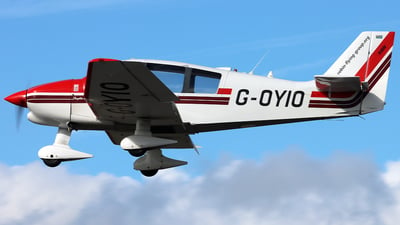
On 27 March 2014, a Pierre Robin DR400/120 aircraft, registration G-OYIO, was involved in an incident at Burgos Airport (LEBG). The aircraft, carrying two occupants, had departed from Evora, Portugal, and was part of a group of aircraft touring Europe and North Africa. The flight was conducted under visual flight rules (VFR) with a filed flight plan. While approaching Burgos Airport, the pilot contacted the Aerodrome Flight Information Service (AFIS) and joined the right downwind leg for runway 22, which was in use. The pilot continued to the base leg and subsequently landed on taxiway C. At the same time, another aircraft on the taxiway had to stop its taxi from the opposite end to avoid a collision.
Aircraft and Personnel
The aircraft was a Pierre Robin DR400/120, serial number 2038, manufactured in 1991. It had a maximum takeoff weight of 900 kg. The engine was a Lycoming O-235 series. The aircraft was privately owned and operated, with a valid airworthiness certificate expiring on 18 May 2014. The pilot, a 64-year-old British national, held a pilot license issued by the UK Civil Aviation Authority on 14 December 2010. He had a total of 176 flight hours, with 174 hours on the same aircraft type. His medical certificate was valid until 5 April 2014.
Investigation and Probable Cause
The investigation determined that the incident resulted in no injuries to the occupants and no damage to the aircraft or other property. The most probable cause was the pilot's erroneous interpretation of the visual non-luminous markings on the runway and taxiway during the landing maneuver. A contributory factor was that the condition of the markings at the time could affect pilots' perception and lead them to an incorrect landing surface. As a result of the incident, the CIAIAC issued one safety recommendation to Aena (Aeropuertos Españoles y Navegación Aérea) on 13 June 2014.