Incident
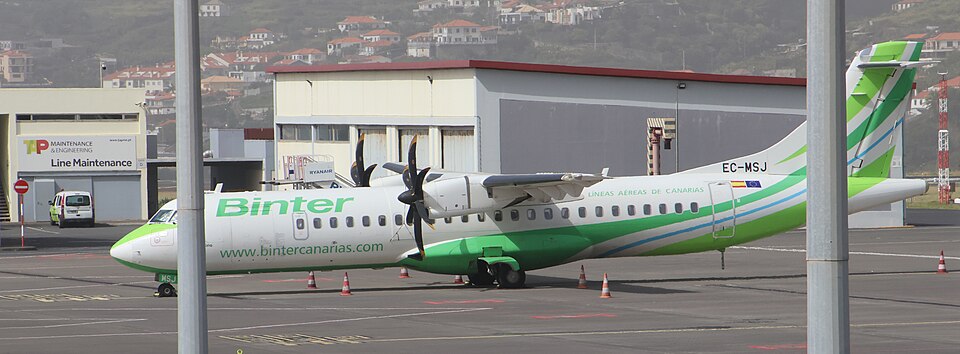
On 8 June 2025, at 08:06 UTC, an ATR72-212A, registration EC-MSJ, operated by Canarias Airlines, experienced an incident during the landing rollout on runway 30 at Tenerife Norte Airport (GCXO). The aircraft had just completed a flight from La Palma without incident. During the landing phase, a part of the nose gear steering system—specifically, the intermediate torsion bar pin of the nose landing gear—detached. This caused both nose wheels to burst. The aircraft came to a stop on the runway, blocking it.
Aircraft and Crew
The aircraft, a 2017 ATR72-212A (serial number 1454), was registered in Spain since 27 March 2018. It was leased from Binter Canarias to Canarias Airlines. The flight crew consisted of a captain, two co-pilots (one in the jump seat monitoring, and one in the right seat undergoing training), and two cabin crew members. There were 73 passengers on board. All 78 occupants were uninjured.
Damage
The nose landing gear sustained damage. No other damage was reported.
Investigation
The investigation was conducted by the Spanish Civil Aviation Accident and Incident Investigation Commission (CIAIAC). It determined that the incident was caused by the loss of the intermediate torsion bar pin from the nose landing gear steering assembly. The exact reason for the loss could not be definitively established, but the investigation ruled out non-compliance with specifications or corrosion. The most probable cause was that the nut securing the pin gradually loosened over time, and the lock washer intended to prevent loosening was missing, which facilitated the part's loss.
Safety Actions
The operator took measures to prevent similar incidents in the future. Consequently, no safety recommendations were issued by the investigating authority.