Factual Information
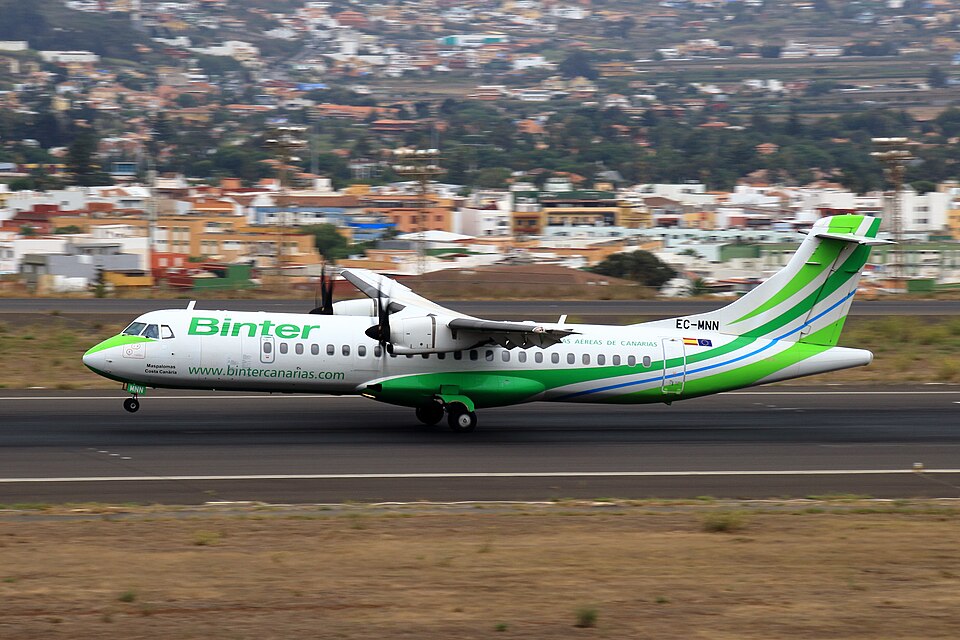
On March 14, 2022, an ATR 72-212 aircraft, registration EC-MNN, operated by Canarias Airlines, was involved in an incident during approach to Las Palmas de Gran Canaria Airport (GCLP). The aircraft was on a commercial air transport flight under IFR rules with 72 occupants (4 crew and 68 passengers). No injuries or damage were reported.
Earlier, another aircraft (ATR 72-212, EC-KRY, operated by Canaryfly) had landed on runway 03L at 11:01 local time and reported a plant (gorse) on the runway. A vehicle (V1) driven by a runway inspector was dispatched to inspect and remove the plant. Subsequently, a Boeing 737-800 (EI-HGT, operated by Ryanair) was cleared to land on runway 03R while the vehicle entered runway 03L. After that aircraft landed, the inspector was instructed to remove another plant near exit S6 on runway 03R.
Sequence of Events
While the inspector was on runway 03L, the incident aircraft (EC-MNN) was on final approach at 3.5 NM, originally cleared for a visual approach to runway 03L. Air traffic control decided to change the clearance to runway 03R to allow the vehicle to access runway 03L. However, the inspector, near exit A4, radioed to confirm whether the aircraft was cleared to land on runway 03L, as it appeared to be approaching that runway. Controllers visually confirmed the aircraft was indeed heading for runway 03L and instructed the inspector to vacate the runway immediately, which he did.
Controllers then communicated to the flight crew that they were cleared to land on runway 03R. The aircraft landed normally on runway 03L at 11:11 local time without further incident. The inspector subsequently removed the second plant and vacated the runway.
The investigation found that the controller did not adhere to procedures by failing to actively monitor the erroneous readback from the aircraft, leading to the miscommunication.
Conclusion
The incident occurred because the controller did not adhere to procedures, specifically by not actively listening to the incorrect readback from the aircraft.