History of the Flight
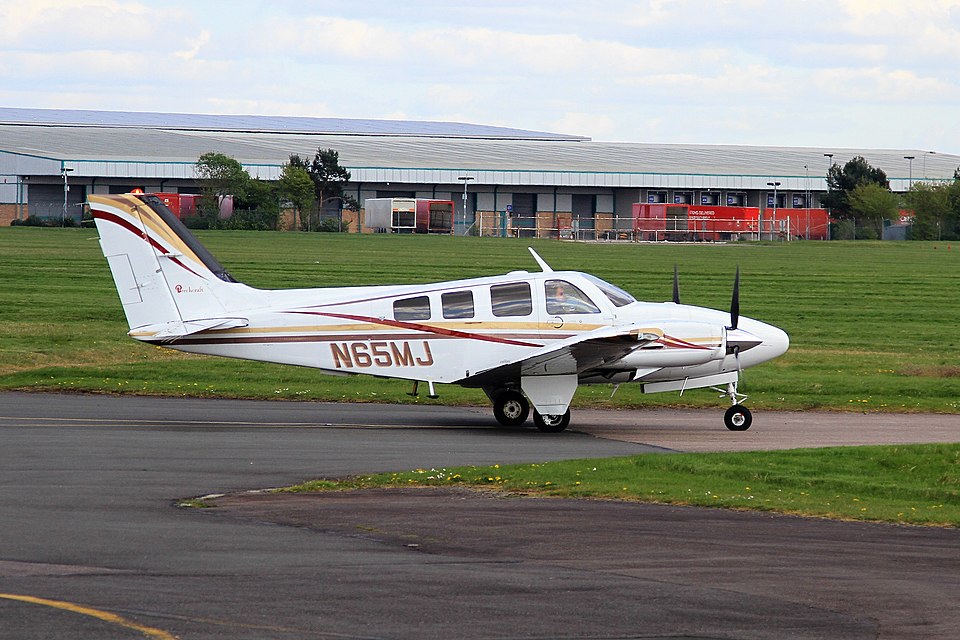
On 29 March 2006, aircraft N65MJ, a Beechcraft 58P, was conducting a flight from Coventry (EGBE) to Jerez (LEJR) with two persons on board. It landed at Santander Airport (LEXJ) at 12:50 UTC to refuel. After the technical stop, the crew prepared to resume the journey. During the takeoff run, at 75 kt, they felt a vibration through the control stick. The aircraft then dipped forward, striking the runway with the nose and both propellers. The aircraft continued straight, then drifted right and stopped on the runway. The crew cut the mixture and gas, and disconnected magnetos, battery, and alternators. The occupants were not injured and exited unassisted. The airport Firefighting Service discharged foam as a precaution.
Aircraft Damage
The aircraft sustained damage to the nose section (heating and radar), nose landing gear, propellers, and engines. Tire debris and propeller impact marks were found on the runway. The runway was closed for nearly two hours.
Personnel and Aircraft Information
The pilot held a PPL, had 225 total flight hours with 117 on type. The copilot held a CPL, had 710 total hours with 42 on type. Both had valid licenses and medical certificates. The aircraft had valid Registration and Airworthiness Certificates. A 50-hour inspection had been completed the same day, during which main gear tires were replaced. The nose gear tire was inspected and its pressure adjusted per the Maintenance Manual, but not replaced.
Meteorological Conditions
At the time of the incident, wind on runway 29 was 15 kt from 170°, gusting to 22 kt; on runway 11, 13 kt from 180°, gusting to 20 kt. ATC reported 16 kt from 180°, gusting 22 kt just before takeoff. Visibility was 40 km, runway visual range over 2,000 m. CAVOK conditions prevailed. Temperature 20 °C, dew point 7 °C, QNH 1,014 mb.
ATC Communications
The aircraft was cleared to start engines at approximately 14:35. Wind was from 200° at 12 kt, runway 29 in use. Later, TWR cleared taxi and line-up, noting wind shift to 190° at 15 kt. The crew opted for runway 11. TWR provided departure point, initial flight level, and transponder code. When entering runway 11, TWR gave wind 180°, 16 kt gusting 22 kt, and cleared takeoff. The crew acknowledged and began takeoff. The Firefighting Chief informed TWR of proceeding to the incident.
Analysis and Conclusions
The nose gear tire had not been replaced during the maintenance check, although its pressure was adjusted. It is likely that the tire's characteristics degraded due to repeated low-pressure cycles (deformed casing, uneven wear, higher sidewall bending). It is unknown if low pressure reappeared after the check. Low tire pressure increases friction due to larger contact area. Lateral forces from crosswind on the nose wheel added stress. The circular cut in the tire suggests a large momentary force allowing casing contact with the rim. Given crosswind and gusts, the aircraft probably bounced slightly before reaching flying speed. The crew, focused on cockpit checks, may have instinctively dived the aircraft. Impact with the runway center line light and possible low tire pressure contributed to tire failure and nose gear folding.
The most likely cause of the collapse of the nose gear support structure is considered to be the rupture of the tire as a result of low pressure while taking off under high intensity crosswind conditions.