What happened
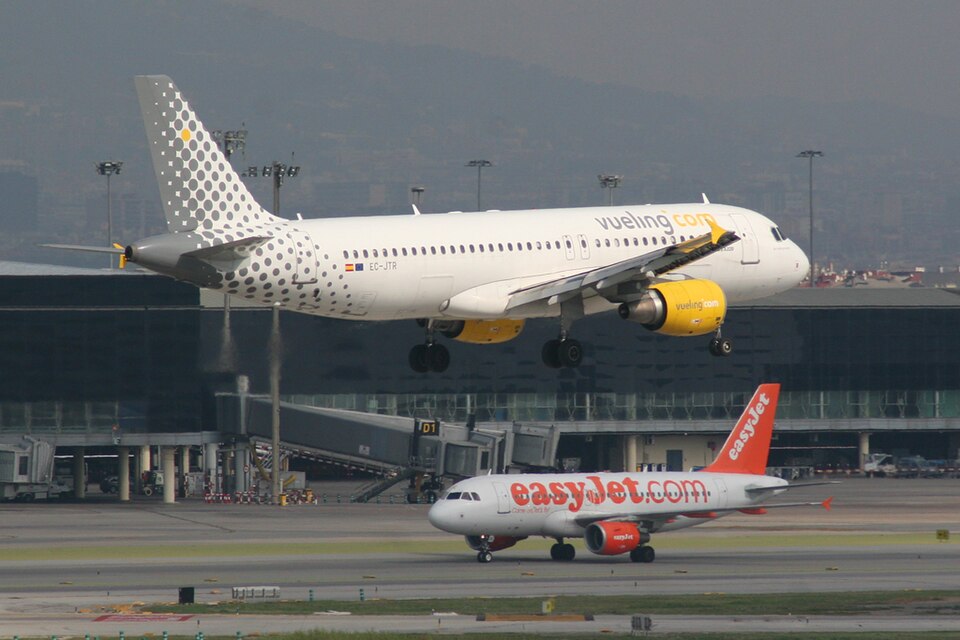
On July 16, 2023, at 07:45 UTC, an Airbus A320-214, registration EC-JTR, operated by Vueling Airlines S.A., was performing a commercial flight from Barcelona (LEBL) to Seville (LEZL). During the takeoff roll on runway 24L, the aircraft was struck by a bird.
At approximately 129 knots, the co-pilot observed a bird, followed immediately by a heavy impact sound in the cockpit. Following the strike, the commander's airspeed indicator showed a sudden, erroneous drop of 38 knots. Although the aircraft was accelerating, the commander interpreted the anomalous reading as a loss of performance and initiated an aborted takeoff after the aircraft had already surpassed the decision speed (V1) of 142 knots.
The aircraft came to a stop with 600 meters of runway remaining. During the heavy deceleration, the autobrake system remained set to the MAX position. The crew noted a strong smell of burning rubber and observed significantly high brake temperatures, with one wheel reaching 568°C. When the crew attempted to apply power to taxi off the runway, the aircraft failed to move because the autobrake was still engaged. Due to the heat, the smell of burning rubber, and the inability to vacate the runway, the commander ordered an emergency evacuation. 15 passengers required medical assistance for minor injuries.
The investigation
The CIAIAC examined flight data from the Flight Data Recorder (FDR) and Cockpit Voice Recorder (CVR). The investigation established that while the bird strike caused the commander's airspeed indicator to become unreliable, the co-pilot's indicator remained accurate. The investigation also found that the commander did not cross-check the erroneous reading against the standby airspeed indicator or the co-pilot's display before deciding to abort the takeoff.
Furthermore, the investigation reviewed the response of the airport's Rescue and Firefighting Services (SSEI). It was noted that the heavy vehicles arrived at the aircraft approximately 4 minutes and 9 seconds after the crew notified the tower, which exceeded the standard maximum response time of 3 minutes.
Findings
- The primary cause of the incident was a bird strike against the commander's Pitot tube, which led to the decision to abort the takeoff after passing V1.
- The commander failed to verify the anomalous airspeed reading using alternative instruments (standby or co-pilot displays).
- The aircraft's autobrake remained in the MAX position during the entire deceleration, which prevented the aircraft from moving under power after the stop.
- The high brake temperatures and the smell of burning rubber were contributing factors to the decision to initiate an emergency evacuation.