Incident Overview
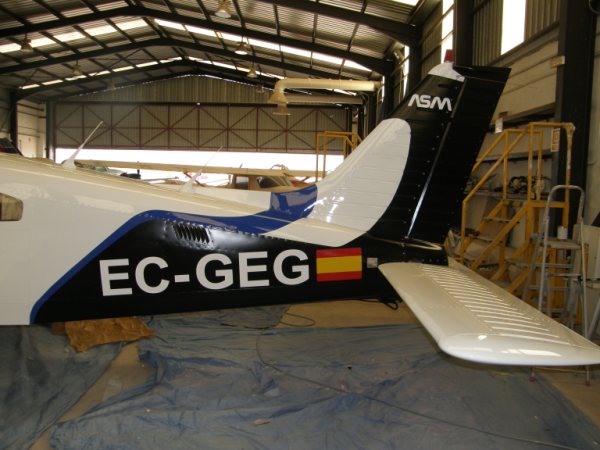
On 13 May 2018, a Piper PA-28-161 aircraft, registered EC-GEG, was involved in a bird strike incident near Embalse de Contreras in Villargordo del Cabriel, Valencia, Spain. The aircraft was conducting a local flight for the revalidation of a single-engine piston (SEP) class rating. Both occupants, the pilot under examination and the examiner, were uninjured.
Aircraft and Crew
The aircraft, a Piper PA-28-161, was privately owned and operated. The crew consisted of a private pilot undergoing an SEP revalidation check and an examiner. No other persons were on board.
Sequence of Events
After departing from Requena aerodrome, the aircraft left the circuit at point W at 3,500 feet, then climbed to 4,500 feet and proceeded towards Embalse de Contreras. Near the reservoir, the crew sighted a vulture approaching from the right. They executed an evasive maneuver and successfully avoided it. Seconds later, they unexpectedly encountered another vulture crossing from left to right at the same altitude. Despite a second evasive maneuver, the vulture struck the tip of the right semispan.
Damage and Return
The collision caused the trailing edge of the right wing to detach and resulted in deformations to the leading edge, the outer rib, and the aileron. The crew returned to Requena aerodrome without further difficulty and landed safely.
Investigation Findings
The investigation concluded that the incident was caused by a mid-air collision with a large bird, specifically a vulture. No other contributing factors were identified. The incident occurred under visual flight rules (VFR) in the maneuvering phase of flight.