Incident Overview
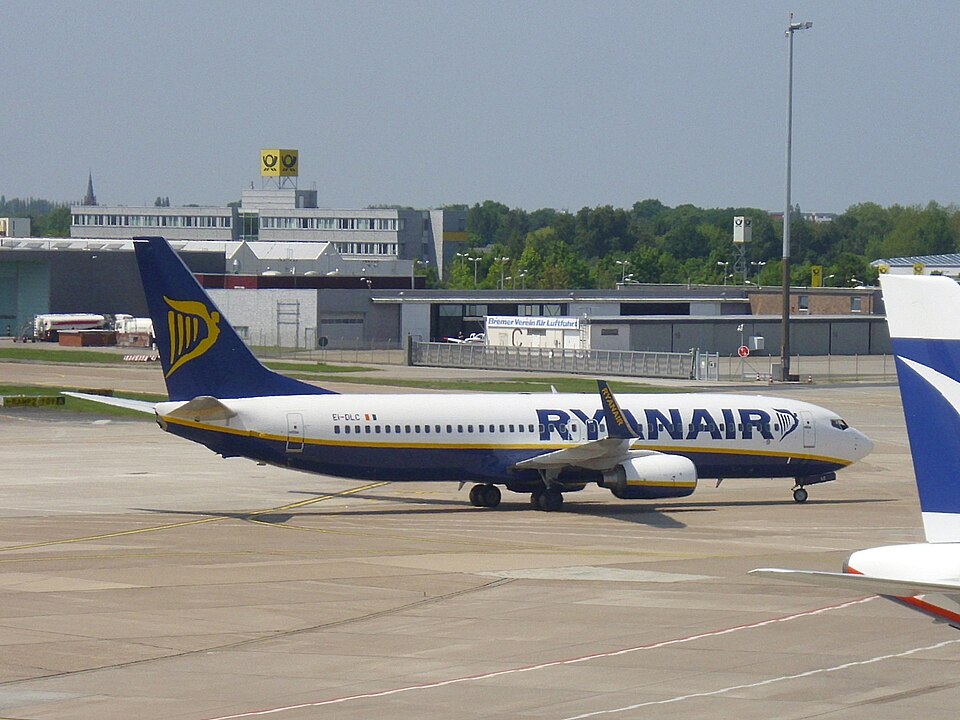
On 31 March 2022 at 21:33 UTC, a Boeing 737-8AS aircraft, registration EI-DLC, operated by Ryanair, landed on runway 32R at Adolfo Suárez Madrid-Barajas Airport following a flight from Brindisi, Italy. The landing was performed with automatic braking and reverse thrust at idle. The first officer, serving as pilot flying, reported no unusual aircraft performance during the landing rollout.
While taxiing on runway 32R at approximately 80 knots, the captain took control and applied gentle braking to exit at taxiway K5. After leaving the exit and joining taxiway KA4, the captain noticed excessive deceleration and applied engine thrust. As the aircraft continued via taxiways KC and M27, the crew observed that taxi speed remained only 18–20 knots despite 40% engine thrust, indicating abnormal drag. All cockpit indications were normal. The crew then reduced thrust, and the aircraft stopped rapidly on taxiway M25 without further braking.
Response and Damage
The crew contacted Ryanair maintenance personnel at about 21:40 UTC. At approximately 22:16 UTC, ground staff arrived and, after engine shutdown, inspected the landing gear. They found the left wheel on the left main landing gear was misaligned and contacting the brake body, preventing movement without replacement. Passengers were disembarked and transported to Terminal 1. The repair was completed at 23:50 UTC, and the aircraft was towed to a parking stand. No injuries were reported.
The incident caused a fracture in the hub of the inner wheel half of the left wheel on the left main landing gear, with additional damage to the wheel and brake assembly.
Investigation Findings
The investigation determined that the incident resulted from a fracture in the wheel hub due to the propagation of a fatigue crack that originated from a corrosion pit. A contributing factor was that the instructions for major overhaul of the wheel, as specified in Component Maintenance Manual (CMM) revision 10 in effect on the day of the incident, were insufficient to ensure wheel integrity throughout its service life.
No safety recommendations were issued.