Incident Description
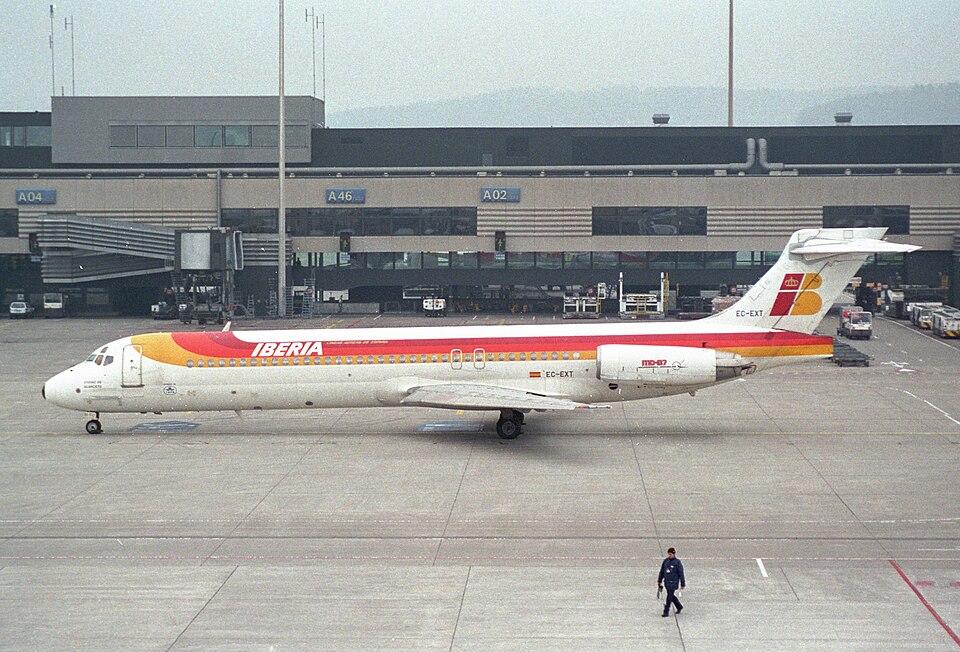
On Monday, 8 April 2003, at 16:59 local time, a McDonnell Douglas DC-9-87 (registration EC-EXT) operating a scheduled passenger flight from Madrid to Jerez de la Frontera was at cruise altitude of 27,000 ft when the right-hand windshield (copilot side) shattered. Simultaneously, smoke appeared at the upper right corner of the windshield and an unpleasant burning odor was noticed in the cockpit. The flight crew immediately donned their emergency oxygen masks, declared an emergency, and initiated an emergency descent to 14,000 ft. The aircraft then returned to Madrid and landed without further incident, with no damage to persons and only minor damage to the aircraft (copilot windshield broken).
Windshield Heating System
The aircraft's windshield panels consist of three glass layers bonded together, with vinyl laminates containing electrically conductive metal oxide between the outer and inner panes and the central pane. The anti-ice system uses electrical current to heat the outer laminate, while the anti-fog system heats the inner laminate. The system includes temperature sensors, controllers, and electrical connectors held by plastic parts. The anti-ice system gradually applies power up to 1500 W over 4 minutes to avoid thermal shock, then maintains the exterior between 105°F and 125°F (40°C to 52°C). A maintenance task exists to check cockpit windows every 72 flight hours.
Investigation Findings
Post-incident inspection by the operator's maintenance personnel found that the cause of the smoke, odor, and subsequent windshield breakage was overheating of the bakelite electrical connector parts due to high electrical consumption in the heating resistances. The thermal controllers were replaced, and the odor did not recur. However, the exact cause of the high consumption could not be determined. Using information from the aircraft manufacturer, it was concluded that the incident could ultimately be due to one or more loose electrical connections (torque less than specified) at the upper right corner of the first officer's windshield. A loose connection may have altered the impedance of the sensing system, demanding more heat from the anti-ice heater layer. This could cause an overcurrent in the outer vinyl layer, leading to pyrolization of the laminate and overheating of the molded plastic connector.
Maintenance History
On 7 April 2002 (the day before the incident), a flight crew reported an "irritant" smell in the cockpit, thought to originate from the left air conditioning pack, which was left inoperative. The next crew on the same day observed persistent smoke during flight. On the ground, operating the right pack alone for 30 minutes did not reproduce the smell, and the left pack remained inoperative. The aircraft was released for service, and the following day the windshield shattered with smoke present.
Previous Similar Events
According to the manufacturer, this type of event had occurred previously. Their safety information database contained 18 similar events, and the Boeing FAA Service Difficulty Reports database (dating back to 1973) recorded 80 similar incidents. Failure modes were similar: windshield arcing, cracking, followed by crew procedures and maintenance replacement of components. No airworthiness directives related to the MD-87's windshield anti-ice or anti-fog systems were found. The manufacturer considered that cracking of the outer pane or charring/arcing does not pose a threat to the airplane due to the fail-safe multi-ply construction and because arcing occurs outside the pressurized area. However, the report notes that the plastic connectors are inside the pressurized area and could pose a fire hazard. Additionally, a broken windshield could impair pilot vision, though regulations require that loss of vision through any one panel still allows safe flight and landing, and side windows can be used if needed.