Synopsis
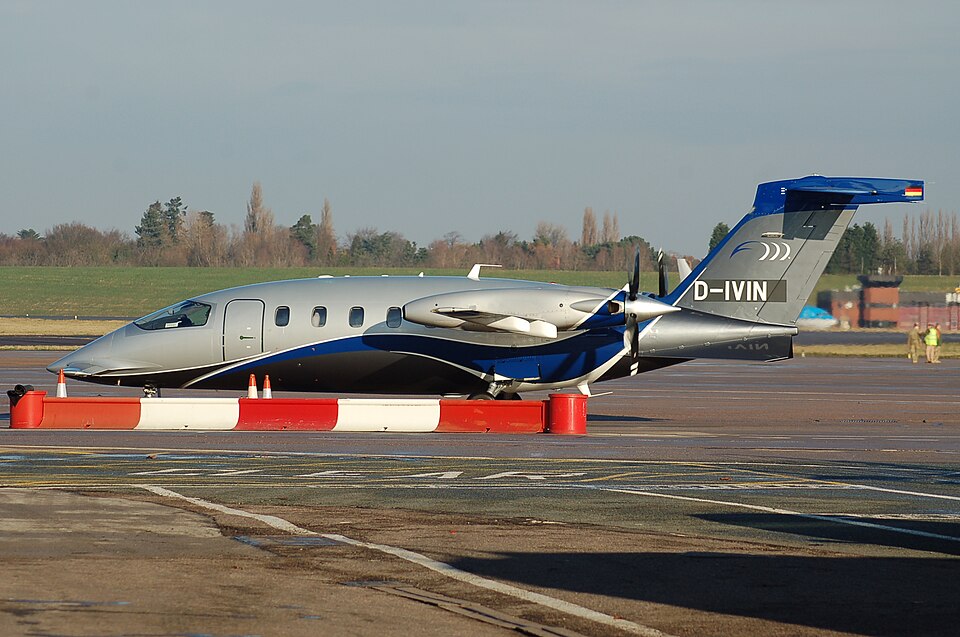
On 20 July 2013, an incident occurred near point GALAT on the GALAT2R standard instrument departure (SID) from Palma de Mallorca Airport (Illes Balears, Spain). The aircraft involved were a Piaggio P-180 “Avanti II”, registration D-IVIN, operated by AirGo Flugservice (flight XGO 5LD), and a Boeing B-767-300, registration G-TCCA, operated by Thomas Cook Airlines Ltd. (flight TCX 14RL).
History of the Flight
Both aircraft departed from runway 06R at Palma de Mallorca Airport. Flight XGO 5LD took off at 10:02:13 UTC, and flight TCX 14RL took off at 10:06:23 UTC. Both were following the GALAT2R SID outbound. They were in radar and radio contact with sector DEO of the Palma Area Control Center (ACC).
At 10:12 UTC, while aircraft TCX 14RL was near point GALAT and climbing through flight level (FL) 190, its crew received a traffic advisory (TA) on the Traffic Alert and Collision Avoidance System (TCAS). Simultaneously, air traffic control instructed the crew to turn right to a heading of north. After initiating the turn, the crew received a descent resolution advisory (RA) from the TCAS, to which they responded as directed. At that time, aircraft XGO 5LD was already in contact with the Barcelona ACC.
Aircraft and Crew Information
The Piaggio P-180, registration D-IVIN, was operated by AirGo Flugservice GmbH. It had 5 persons on board: 2 crew and 3 passengers, none of whom were injured. The flight was commercial air transport (air taxi) and was in the climb phase.
The Boeing B-767-300, registration G-TCCA, was operated by Thomas Cook Airlines, Ltd. It had 334 persons on board: 11 crew and 323 passengers, none of whom were injured. The flight was a non-scheduled international passenger flight and was also in the climb phase.
Air Traffic Control Information
The incident occurred while both aircraft were under the control of sector DEO of the Palma ACC. The tactical and planning controllers were responsible for the sector. The Short Term Conflict Alert (STCA) function of the SACTA automated air traffic control system was disabled at the time.
Findings and Cause
The investigation concluded that the incident occurred due to the lack of separation between the two aircraft resulting from a loss of situational awareness by the tactical controller and the planning controller. The failure to detect the conflict was due to the fact that the short term conflict alert (STCA) function of the SACTA system was disabled.